Trailing Stop Order Crypto: How It Works, Callback Rate And Examples

A trailing stop order is a stop order that follows the market in your favour and then fires when price reverses by a distance you chose. Unlike a normal stop, the trigger level is not fixed: it moves up behind a rising price on a long position, and it never moves back down. That makes it one of the few exit tools that can protect profit without a manual update. In this article, Backcom.io explains how a trailing stop order crypto traders use works on futures exchanges, what the callback rate and activation price do, and where the order can let you down.
1. What Is A Trailing Stop Order In Crypto?
A trailing stop order is a conditional order that sets its trigger price from the best price reached since the order became active. On a long position the order tracks the highest price, and on a short position it tracks the lowest price. When price retraces from that extreme by the chosen distance, the exchange sends a closing order.
Three settings define the order on most platforms:
- Callback rate (or distance). The reversal you tolerate, given as a percentage or a fixed amount.
- Activation price. The level price must reach before the trailing starts. Many platforms let you leave it empty.
- Trigger type. Whether the exchange reads the last traded price or the mark price.
The order sits on the exchange's side, so it keeps working while your phone is off. That is the main difference from the trailing stop in MetaTrader, which depends on a running terminal or EA, as our guide to the trailing stop on MT5 shows. For the wider family of conditional orders, see our overview of crypto order types. If you are new to the market itself, start with our beginner guide to crypto.
2. How Does A Crypto Trailing Stop Work Step By Step?
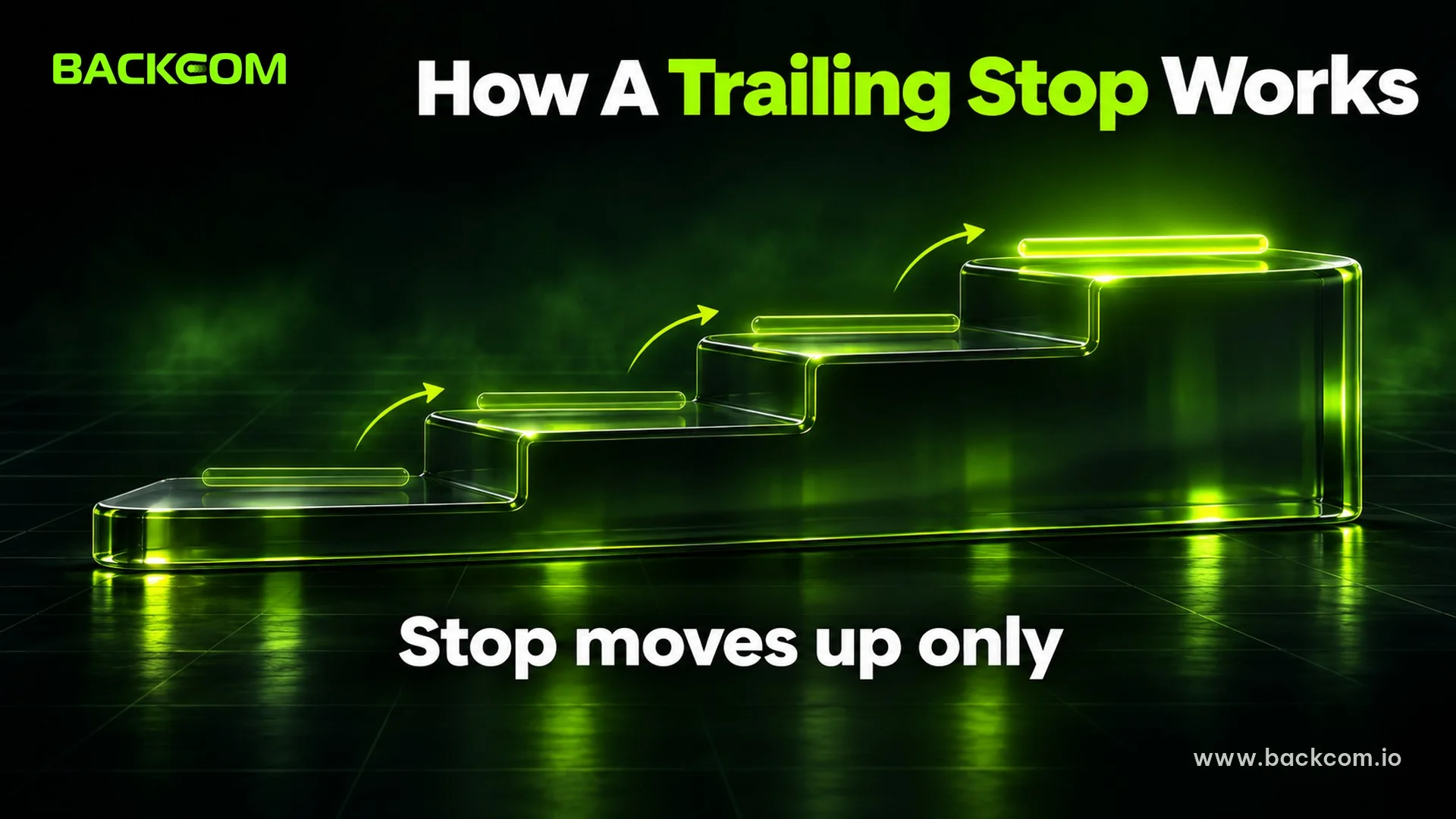
A crypto trailing stop works in two stages: it first waits for activation, then it ratchets the trigger behind each new extreme. The trigger only moves in the direction of your profit, so it can rise on a long but can never fall.
The numbers below are round figures for illustration, not a forecast and not a recommendation. Say you hold a long BTCUSDT perpetual position opened at 100,000. You place a sell trailing stop with a 3% callback rate and an activation price of 104,000.
| Step | Market event | Trailing state | Stop level (peak × 0.97) |
|---|---|---|---|
| 1 | Price at 100,000 to 103,999 | Waiting, not active | None |
| 2 | Price touches 104,000 | Activated | 100,880 |
| 3 | Price reaches 108,000 | Stop ratchets up | 104,760 |
| 4 | Price reaches 112,000 | Stop ratchets up | 108,640 |
| 5 | Price dips to 110,000 | No trigger, stop holds | 108,640 |
| 6 | Price falls to 108,640 | Trigger fires | Closing order sent |
The stop level at each step is the highest price reached multiplied by 0.97, which is one minus the 3% callback rate. At the 112,000 peak, 112,000 × 0.97 = 108,640. The dip to 110,000 in step 5 does not move the stop down, because the peak is still 112,000.
If the closing order fills near 108,640, the position gains about 8.64% from the 100,000 entry before fees and slippage. It also gives back 3,360 USDT per BTC from the peak, which is the cost of the callback rate. A trailing stop never sells the top. It sells after a pullback, and the callback rate sets how deep that pullback can be.
A short position mirrors this. The order tracks the lowest price and the trigger sits above it: with a low of 90,000 and a 3% callback rate, the trigger is 90,000 × 1.03 = 92,700.
3. What Is The Trailing Stop Callback Rate And How Do You Choose It?
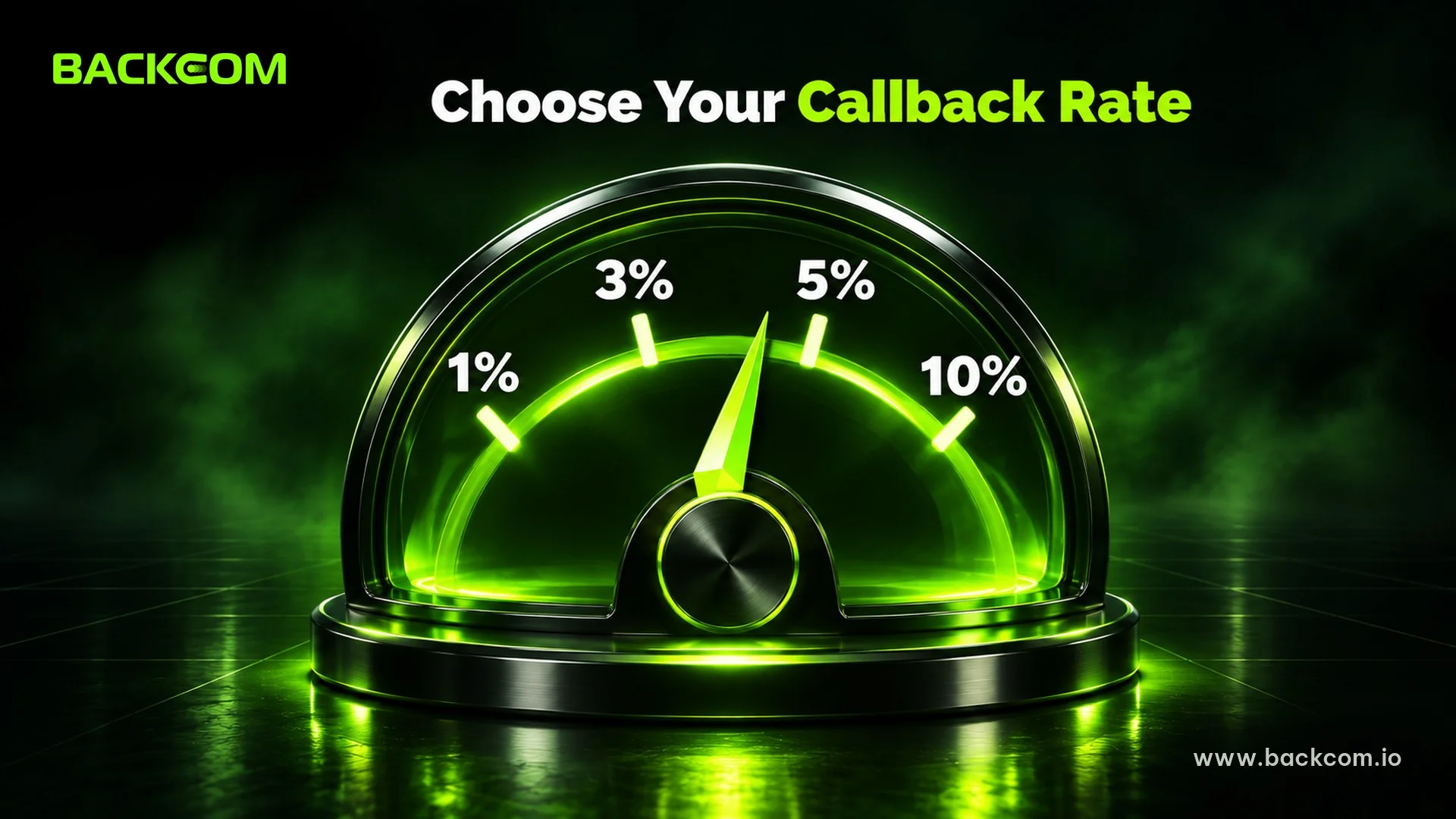
The trailing stop callback rate is the percentage price may move against you, measured from the best price, before the order triggers. Binance defines the rebound as the distance from the extreme price divided by that extreme, and it lists the trigger conditions for a sell as an activation price at or below the highest price plus a rebound at or above the callback rate (Binance FAQ).
A small rate keeps more profit but gets shaken out by ordinary noise. A large rate survives noise but returns more profit. Using the same 112,000 peak:
| Callback rate | Stop level at 112,000 peak | Room given back from the peak |
|---|---|---|
| 1% | 110,880 | 1,120 |
| 3% | 108,640 | 3,360 |
| 5% | 106,400 | 5,600 |
| 10% | 100,800 | 11,200 |
Reference arithmetic only. Real fills depend on liquidity, fees and the order type the platform sends when the stop fires.
Trailing Stop Callback Rate Across Exchanges
The idea is the same everywhere, but the settings and wording differ. Binance uses "callback rate" and states a minimum of 0.1%. OKX describes the distance as either a fixed amount or a percentage, with the percentage trigger worked out as the highest price × (1 − callback ratio) (OKX Learn). Bybit uses the term retracement distance in its help centre. Open the order form of your own exchange and read the limits before you rely on a specific number.
How To Pick A Number Without Guessing
Binance notes that there is no optimal callback rate or activation price. A practical method is to start from volatility, not from hope:
- Look at the pullbacks on your chart timeframe. If normal retracements are 2% to 3%, a 1% callback rate will trigger on noise.
- Compare the rate with your leverage. A 3% price move at 10x leverage is roughly a 30% move on your margin, before fees.
- Check that the stop still sits above your entry. A rate that is too wide can leave the stop under your entry price for a long time.
- Size the position first. Our position size calculator guide shows how to cap the loss in money terms.
4. How Does A Trailing Stop Loss Futures Order Differ From A Normal Stop Loss?
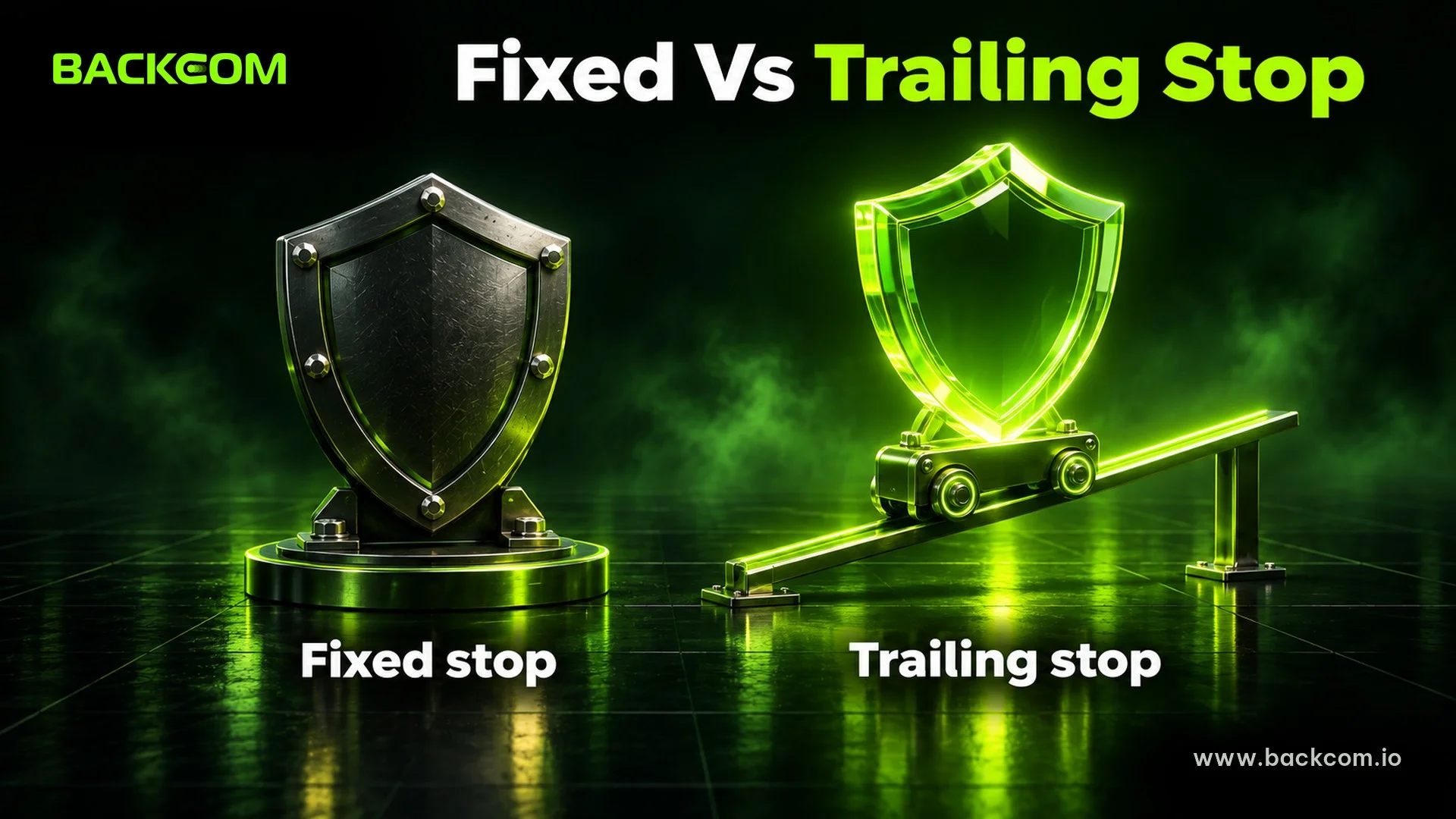
A trailing stop loss futures order moves with price, while a normal stop loss stays where you put it. Both are exit orders, and both turn into a market or limit order when triggered, but they answer different questions.
Trailing Stop Vs Stop Loss Crypto: Side By Side
| Feature | Normal stop loss | Trailing stop |
|---|---|---|
| Trigger level | Fixed price | Moves with the best price |
| Main job | Cap the loss if you are wrong | Protect gains once you are right |
| Needs activation price | No | Optional on most platforms |
| Moves against you | Never | Never |
| Updated manually | Yes, if you want to tighten it | No, the exchange does it |
The two are not rivals. Many traders open with a fixed stop to define the risk, then add or switch to a trailing stop once the trade is in profit. Our guide to crypto stop loss covers the fixed version, and the guide to take profit orders covers the fixed exit on the upside.
5. What Are The Activation Price And Trigger Type?
The activation price is the level where the trailing starts, and the trigger type decides which price feed is watched. Both change when your order fires, so they deserve as much attention as the callback rate.
- Activation price. On Binance, a sell trailing stop needs an activation price above the market and a buy needs one below it. If you leave it empty, the platform defaults to the current market price. OKX likewise says an order without an activation price starts tracking immediately after submission.
- Why use one. A later activation price lets the trade breathe before the trailing begins, so an early dip does not close a position that has not yet moved.
- Last price vs mark price. Binance lets you choose. With the mark price, the order can activate even if the last traded price has not reached the activation level, and the two can differ a lot in extreme moves.
For a short position, the logic flips. You protect it with a buy trailing stop, whose activation price must sit below the market, and the order tracks lows instead of highs. Read the platform's help page when you switch direction.
6. What Can Go Wrong With A Trailing Stop Order?
A trailing stop manages direction, not execution quality, so most failures come from fills and settings. These are the problems to check before you rely on it.
- Slippage on the closing order. OKX states that a triggered trailing stop submits a market closing order, so the fill can differ from the trigger price when liquidity is thin. Our guide to slippage in crypto explains why fast markets widen the gap.
- A rate tighter than normal noise. A 0.5% callback rate on a volatile coin can trigger within minutes, and you may then watch price continue in your direction.
- A rate wider than your risk plan. A 10% callback rate on a leveraged position can cost more than the margin you wanted to risk.
- Taker fees on exit. A market closing order is usually charged the taker fee, which our explainer on maker vs taker fees breaks down.
- Liquidation arriving first. The stop does not move your liquidation price. With high leverage, a sharp drop can liquidate the position before a wide trailing stop triggers.
- Leftover orders. If you close a position by hand, check whether the trailing order is still in your open orders. Binance lets you mark a trailing stop as reduce-only so it can only close a position.
A trailing stop reduces the need to watch the chart, but it does not remove the need to size the position and understand perpetual futures risk.
7. How To Set A Trailing Stop Order Crypto Step By Step
The layout differs by platform, but the sequence is nearly the same everywhere. Practise on a small size first.
- Open the futures order form and confirm the contract, margin mode and your position side.
- Select the trailing stop order type. It often sits under "Stop", "Conditional" or "Trigger" orders.
- Choose the direction. Use sell to protect a long, and buy to protect a short.
- Enter the callback rate. Pick a value based on the pullbacks you see, not on a round number.
- Set the activation price (optional). Choose a level above your entry for a long if you want the trailing to start only in profit.
- Pick the trigger type and quantity. Keep the quantity at or below the open position, and consider the reduce-only option if the form offers it.
- Review and submit. Check the preview, then find the order in your open orders list and confirm the settings.
Frequently Asked Questions (FAQ) About Trailing Stop Orders In Crypto
Does A Trailing Stop Order Guarantee A Profit?
No. A trailing stop order only decides when to exit after a pullback. A fast market can fill your closing order away from the trigger, and the trade can still end at a loss if the stop is below your entry.
Can A Trailing Stop Move Backwards?
No. On a long position the trigger level only moves up, and on a short position it only moves down. A dip in price does not pull the stop back toward the market.
What Is A Good Callback Rate For Crypto?
There is no universal answer. Binance itself says no optimal callback rate exists. Compare the rate with the typical pullback on your timeframe and with your leverage, then test it on a small size.
Is A Trailing Stop The Same As A Trailing Stop Limit?
Not always. Some platforms send a market order when the trailing stop triggers, while others let you attach a limit price. Read the order description on your exchange, because a limit price can avoid slippage but may leave the order unfilled.
Can I Use A Trailing Stop In Spot Trading?
Some exchanges offer a spot trailing stop, and Binance publishes a separate help page for it. The mechanics are similar, but there is no leverage or liquidation, so the risk profile is different from futures.
Conclusion: Let The Stop Follow Price, But Set The Rate Yourself
A trailing stop order is a simple idea with a few settings that matter: the callback rate, the activation price and the trigger type. Choose the rate from real pullbacks and your leverage, remember that the trigger only moves in your favour, and expect slippage when the closing order is a market order. Keep your position size and liquidation price in mind, and test the order on a small size before you rely on it.
Disclaimer: This content is compiled by Backcom.io for information only and is not investment advice. Crypto futures carry a high risk of loss, and leveraged positions can be liquidated. Rules differ by country and by exchange, so check the product terms and your local regulations before you trade.
Was this article helpful?
Join The Backcom.io Community
Get the latest on trading rebates, trading tips, and broker deals — and connect with thousands of traders worldwide.

Backcom App
Track Your Rebates Every Day
Every rebate is visible by broker and by day. Manage your wallet and withdrawals in one place.
Open Backcom App