Crypto Margin Call Explained: Warning Signs, Maintenance Margin And How To Avoid It

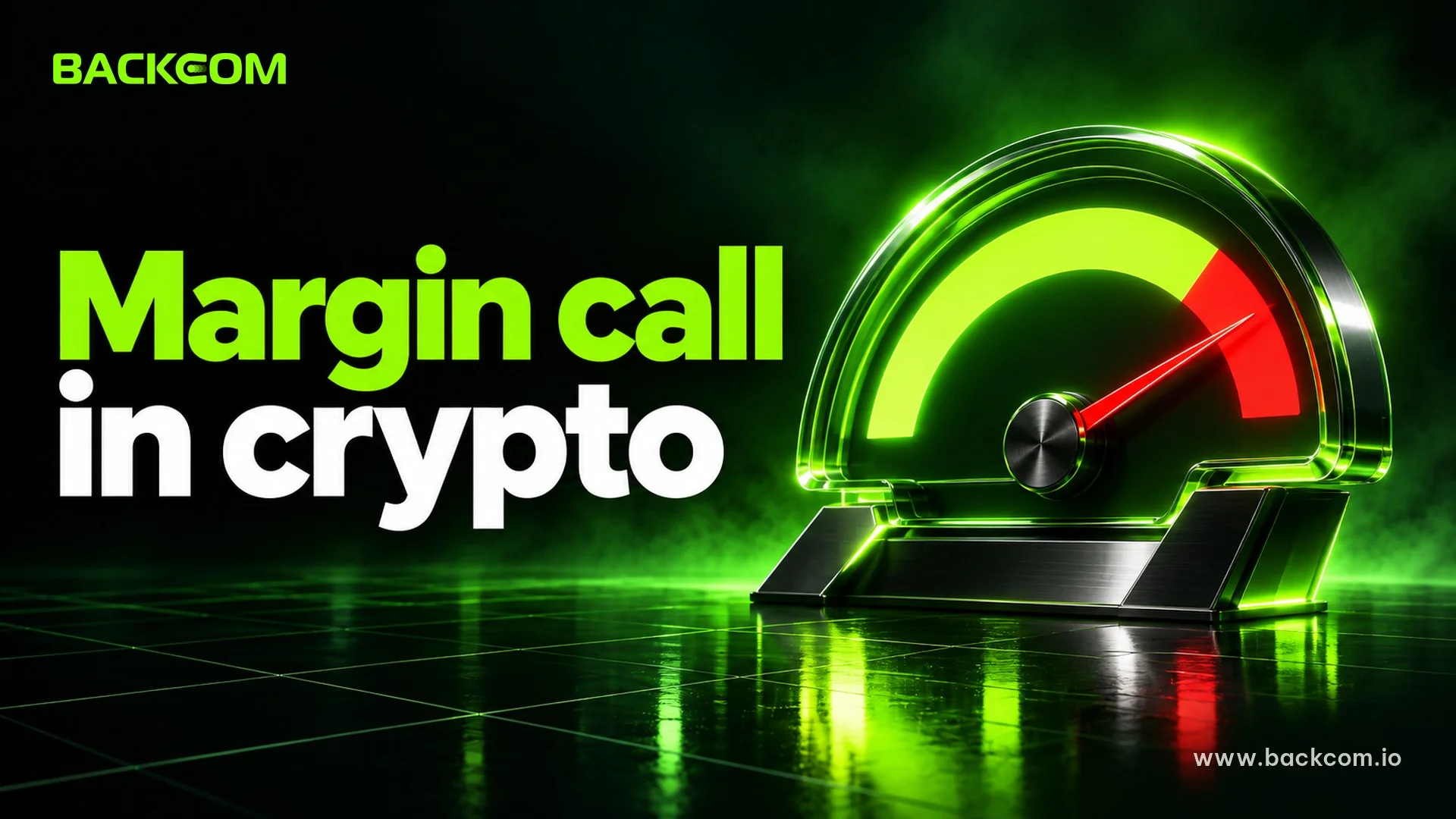
A crypto margin call is a warning, or a demand, that your account no longer holds enough collateral to keep a leveraged position open. On a stock or forex broker it arrives as a message asking you to deposit more funds. On most crypto futures exchanges it looks different, and that difference catches many new traders out. In this article, Backcom.io explains what a margin call means in crypto, how the margin ratio moves, how a margin call differs from liquidation, and what you can do before the exchange closes your trade. All numbers are illustrative.
What Is A Crypto Margin Call?
A margin call is the point where your collateral falls too close to the minimum the exchange requires, and you must add funds or reduce the position. The term comes from traditional brokerage, where the broker contacts you and gives you time to respond.
Crypto works a little differently. Markets trade around the clock, prices can move several percent in minutes, and most perpetual futures platforms do not phone you. Instead they show a margin ratio or a similar risk gauge and close the position automatically if it reaches the limit. Some exchanges send an alert earlier, and some account types, such as portfolio margin, have named warning levels. The rules differ by platform, so read yours.
Two ideas sit underneath every margin call:
- Leverage: you control a larger position than your own money, so a small price move is a large share of your collateral. If leverage is new to you, start with what leverage means in crypto trading.
- A minimum buffer: the exchange wants a cushion so that a losing position cannot push your account below zero.
If you are new to the market itself, our beginner guide to crypto covers the basics first.
Maintenance Margin Crypto Traders Must Keep
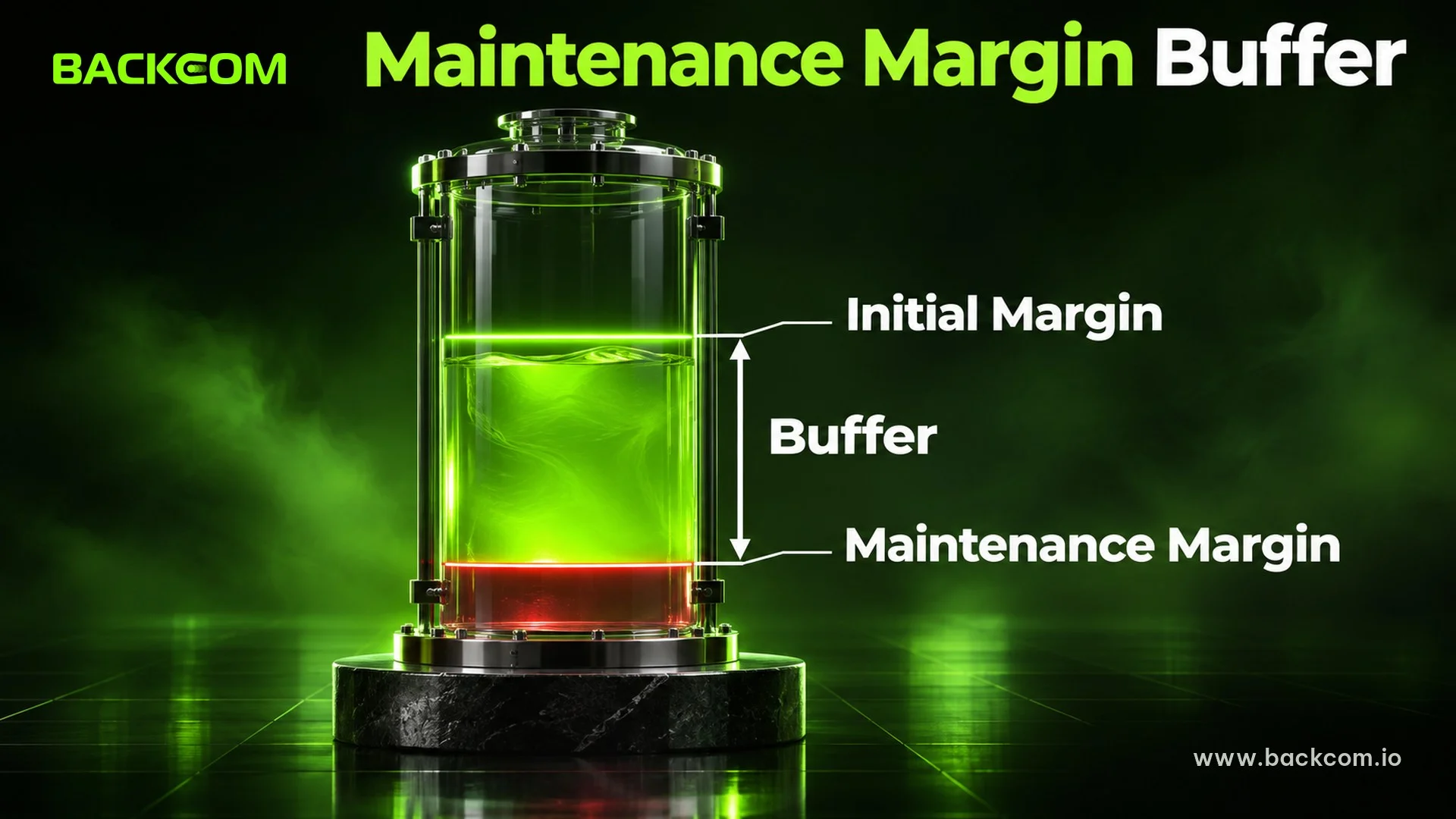
Maintenance margin is the minimum collateral you must hold to keep a leveraged position open. It is different from initial margin, which is the amount you post to open the trade.
According to the Binance support page on leverage and margin, the initial margin is set by the leverage you select, while maintenance margin follows this formula: notional position value × maintenance margin rate − maintenance amount. The same page states that maintenance margin is calculated the same way whatever leverage you choose, and that larger positions fall into higher tiers with a higher rate.
That has three practical consequences:
- Leverage sets your entry margin, not your safety line. The maintenance requirement is tied to position size and tier.
- Bigger positions need more buffer. The rate rises in steps as notional value grows.
- Your margin balance includes unrealised profit and loss. A losing trade shrinks your margin balance even if you deposit nothing new.
Exact rates, tiers and formulas vary by exchange and by contract, so look up the table for the pair you trade.
Margin Ratio Crypto Futures Traders Should Watch
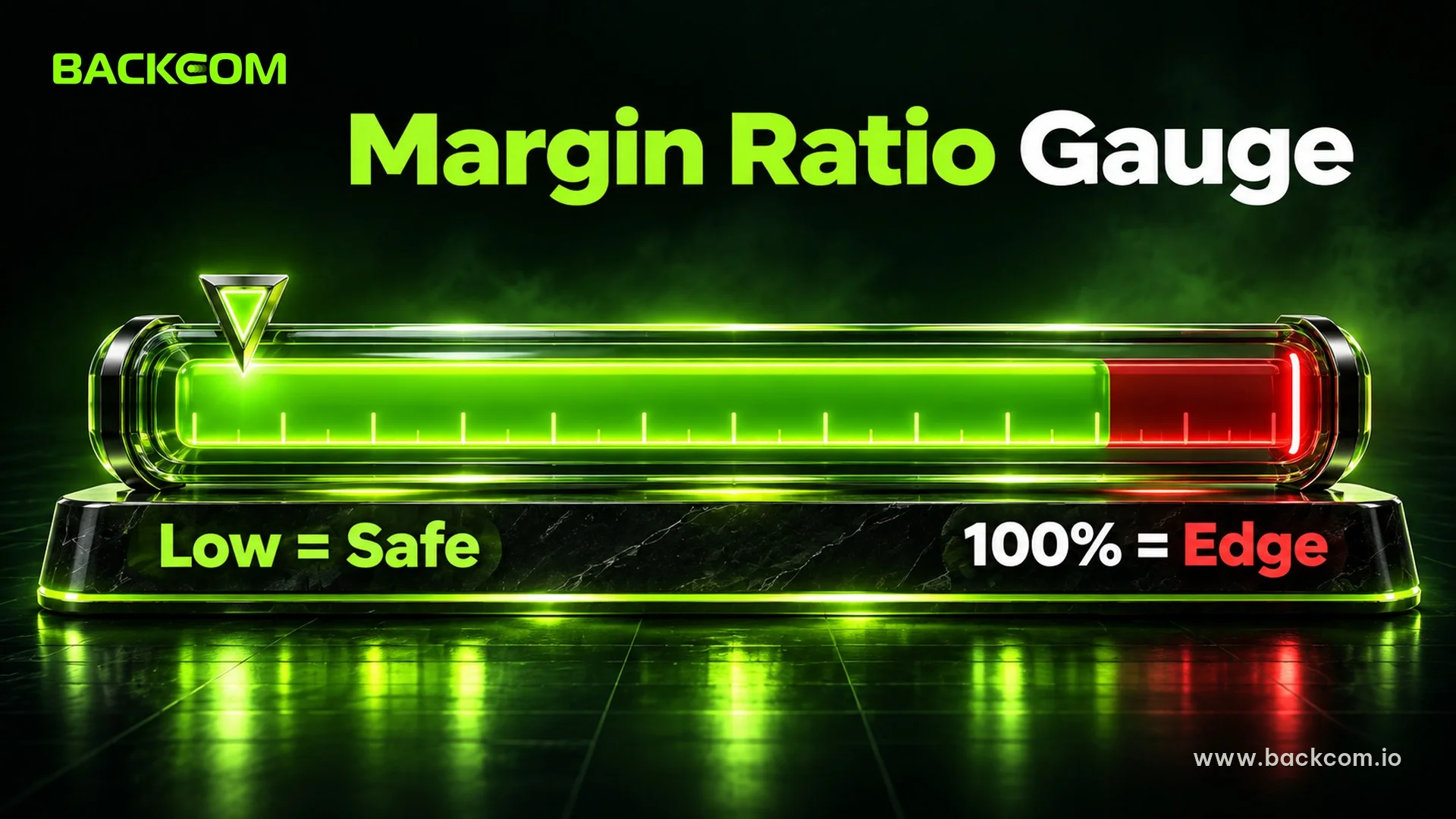
The margin ratio compares what the exchange needs with what you hold. On Binance, the liquidation guide says the margin ratio is maintenance margin divided by margin balance, and that when it reaches 100% some, if not all, of your positions will be liquidated.
Margin ratio = Maintenance margin ÷ Margin balance
Read it as a fuel gauge that runs the opposite way: a low number is healthy, and 100% is the edge. Other exchanges may define the gauge differently, for example as a percentage of equity that is still free, so check what your screen actually shows.
A Worked Example With Illustrative Numbers
Imagine a long BTC position with a notional value of 10,000 USDT, opened at 100,000 with 10x leverage. The initial margin is 1,000 USDT. Assume a flat maintenance margin rate of 0.5% and ignore fees and tiers, which real exchanges apply.
| BTC price | Unrealised loss | Margin balance | Maintenance margin | Margin ratio |
|---|---|---|---|---|
| 100,000 | 0 | 1,000 | 50.0 | 5.0% |
| 95,000 | 500 | 500 | 47.5 | 9.5% |
| 91,000 | 900 | 100 | 45.5 | 45.5% |
| About 90,450 | About 955 | About 45 | About 45 | 100% |
This table uses simplified assumptions for teaching. Real liquidation prices depend on the exchange's tiers, fees and price source.
The ratio barely moves at first, then climbs quickly. Between 95,000 and 91,000 the margin ratio jumps from 9.5% to 45.5% because every further dollar of loss eats into a smaller cushion. The last stretch from 91,000 to about 90,450 takes the ratio from 45.5% to 100%.
Notice what did not change: the position, the leverage setting and the deposit. Only the price moved. That is why a position that looks calm can become urgent in a single candle. For the formulas behind the final line of the table, see how to calculate liquidation price.
Margin Call Vs Liquidation: What Is The Difference?
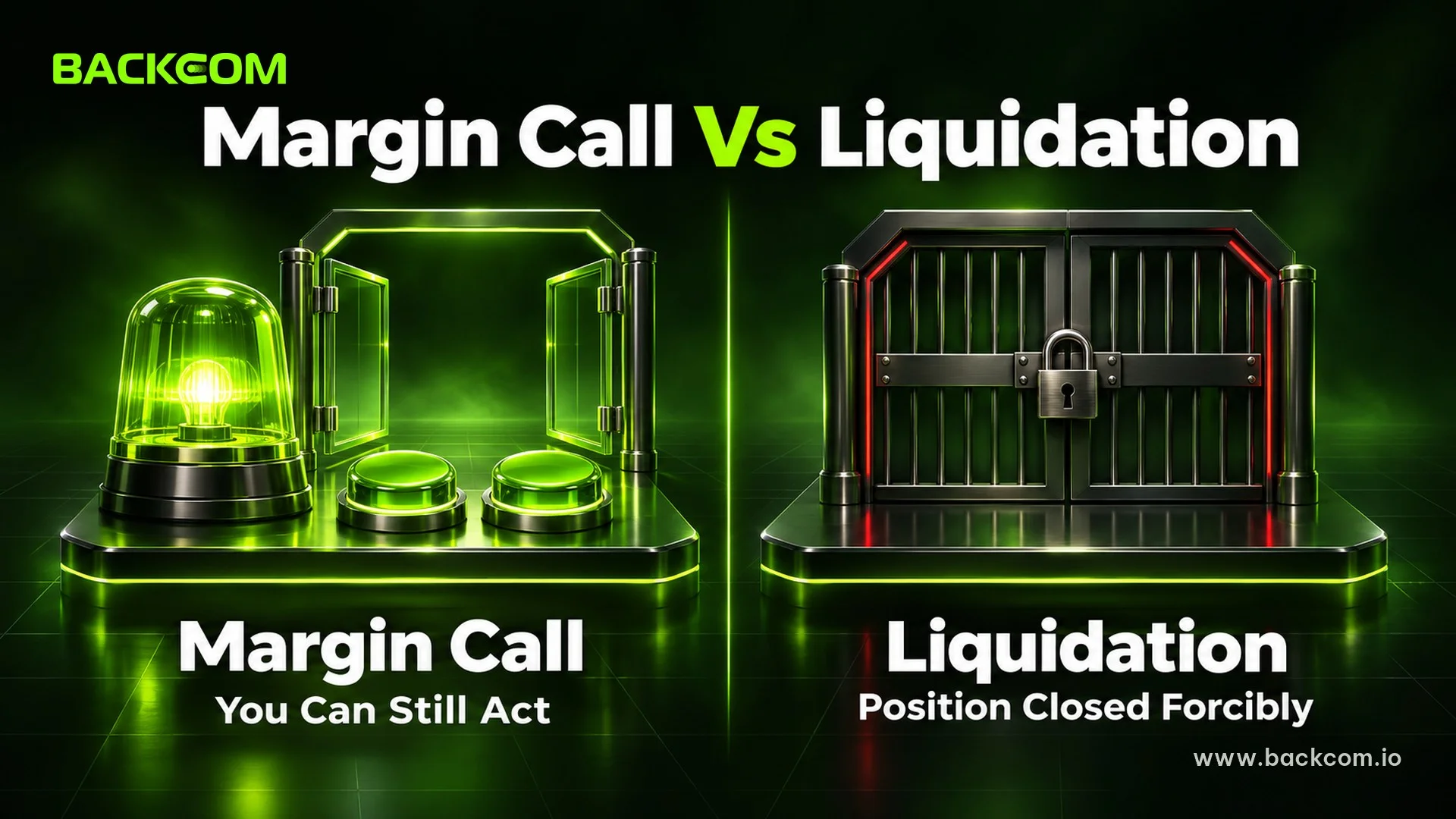
The margin call vs liquidation question is really about timing. A margin call is a warning that comes while you still have a choice. Liquidation is the exchange closing the position for you once the choice is gone.
| Margin call | Liquidation | |
|---|---|---|
| What it is | A request or alert to add collateral | A forced close by the exchange |
| Who decides | You | The exchange's risk engine |
| Timing | Before the limit | When the limit is reached |
| Typical result | You deposit, reduce or close | Position closed, collateral can be lost |
This table summarises the general concepts. Names, alerts and thresholds differ by exchange and account type, so check your platform's rules.
On crypto perpetuals the first step is often missing. You may see a rising margin ratio and perhaps a notification, but no human will call you. Liquidation itself also has stages. The Binance liquidation protocols page says liquidation is triggered when the mark price reaches the liquidation price, and that the system first tries to reduce the margin deficit without closing the whole position by selling part of it. If the remaining margin covers the requirement, the rest of the position survives. The page also describes a liquidation clearance fee deducted from the assets backing a liquidated position.
If you also trade forex, the same ideas appear with different names. Our article on margin call versus stop out in forex shows how brokers use two separate levels, which is a useful contrast to crypto's single ratio.
Warning Signs Before A Margin Call Or Liquidation
Most blown accounts show the same early signs. Learn to spot them while there is still room to act:
- A rising margin ratio: if it moves from single digits to the middle of its range, the buffer is already thin.
- Liquidation price close to the market price: on high leverage the gap can be only a few percent.
- A large unrealised loss relative to margin: once the loss is half of your margin, a modest further move matters.
- Funding payments eating the buffer: on perpetuals, funding can drain collateral slowly. See what funding rate means for how it works.
- Volatility around events: big announcements and thin weekend liquidity often produce sharp wicks.
- Cross margin sharing one pool: a loss on one position reduces the buffer behind all the others. Read cross margin versus isolated margin to see the difference.
If three or more of these apply at once, treat the position as urgent rather than waiting for an alert.
Add Margin To Avoid Liquidation: Does It Work?
Adding margin lowers the margin ratio and pushes the liquidation price further away. The Binance guide on reducing liquidation chances lists keeping more margin as one of its measures, and says a higher margin balance lowers the liquidation price.
Back to the example. Suppose the price has fallen to 91,000, where the margin ratio is 45.5%. You add 400 USDT of margin to the position, taking it to 1,400 USDT.
- New margin balance: 1,400 − 900 = 500 USDT.
- New margin ratio: 45.5 ÷ 500 = about 9.1%.
- New liquidation price: roughly 86,430 under the same simplified assumptions, versus about 90,450 before.
That looks like a clean rescue, but weigh it before you do it:
- You are putting more money behind a losing idea. If the trade is wrong, you lose the extra 400 as well.
- Isolated and cross behave differently. In isolated mode you choose how much margin the position gets. In cross mode, the whole account balance already backs the position.
- It may be better to reduce size. Closing part of the position cuts the maintenance requirement and locks in a smaller loss, without adding fresh funds.
The Binance page also warns against adding contracts to a losing position, since that raises the liquidation price of the whole position. Adding collateral and adding size are very different actions.
How To Avoid A Crypto Margin Call
Avoiding trouble is cheaper than rescuing a position. These habits work on any exchange:
- Use lower leverage: the lower the leverage, the more room price has to move. A position at 3x has a far wider gap to liquidation than the same position at 20x.
- Size from the stop, not from the margin: decide how much you will lose first, then work out the size. Our guide to position size in crypto futures and the position size calculator show the method.
- Set a stop loss inside the liquidation price: a stop that triggers after liquidation protects nothing. The Binance page recommends a stop loss to exit a losing position earlier.
- Keep spare margin outside the trade: funds sitting in your account can be added quickly, but only if you check in time.
- Prefer isolated margin for risky trades: it caps the loss to the margin you assigned, though that margin can still be lost in full.
- Account for slippage: a stop-market fill can land beyond your price in a fast move. Read what slippage is in crypto to plan for it.
- Avoid adding to losers: averaging down on leverage increases both position size and maintenance margin.
None of these removes risk. They only widen the gap between an ordinary bad day and a closed position.
Frequently Asked Questions (FAQ) About Crypto Margin Call
Do Crypto Exchanges Send Margin Calls?
Some do and many do not. Traditional brokers usually contact you, but most perpetual futures platforms rely on a visible margin ratio and automatic liquidation. Some account types have alert levels. Read your exchange's help pages and enable notifications, but do not rely on being warned.
Is A Margin Call The Same As Liquidation?
No. A margin call is a warning or demand that comes first, while you can still act. Liquidation is the forced closing of the position when your collateral can no longer cover the requirement. On many crypto exchanges the margin call stage is absent and only liquidation exists.
At What Margin Ratio Does Liquidation Happen?
It depends on the exchange. Binance's support page says liquidation starts when the margin ratio reaches 100%. Other platforms may use a different formula or threshold, so compare the exact definition on your platform before comparing numbers.
Can I Avoid Liquidation By Adding Margin?
Often yes, if you add it in time. More margin lowers the margin ratio and moves the liquidation price away from the market. It also raises the amount at risk, so reducing the position or closing it may be the safer choice.
Conclusion: Treat The Margin Ratio As Your Early Warning
A crypto margin call is less a phone call than a risk reading you must watch yourself. Know your maintenance margin, track the margin ratio, and keep a stop loss inside your liquidation price. When the gauge rises, reduce size or add collateral deliberately, and never treat extra margin as a way to avoid admitting a trade is wrong.
Disclaimer: This content is compiled by Backcom.io for information only and is not investment advice. Crypto trading, especially with leverage, carries a high risk of loss, including the loss of all your margin. Examples use illustrative numbers, and margin rules, fees and liquidation methods differ by exchange, so check your platform's rules before trading.
Was this article helpful?
Join The Backcom.io Community
Get the latest on trading rebates, trading tips, and broker deals — and connect with thousands of traders worldwide.

Backcom App
Track Your Rebates Every Day
Every rebate is visible by broker and by day. Manage your wallet and withdrawals in one place.
Open Backcom App