How To Avoid Crypto Exchange Scams: 8 Red Flags Before You Deposit

Learning how to avoid crypto exchange scams comes down to spotting a short list of warning signs before any money leaves your bank or wallet. Fake platforms copy the look of real exchanges, show convincing balances and then block withdrawals. The FBI's 2024 Internet Crime Report counts about $9.3 billion in reported losses involving cryptocurrency, so this is not a rare problem. In this article, Backcom.io walks through eight red flags (sections 1 to 8) you can check in minutes, a small-deposit test and what to do if you have already paid.
1. Is It Guaranteed Profit Or "Risk-Free" Income?
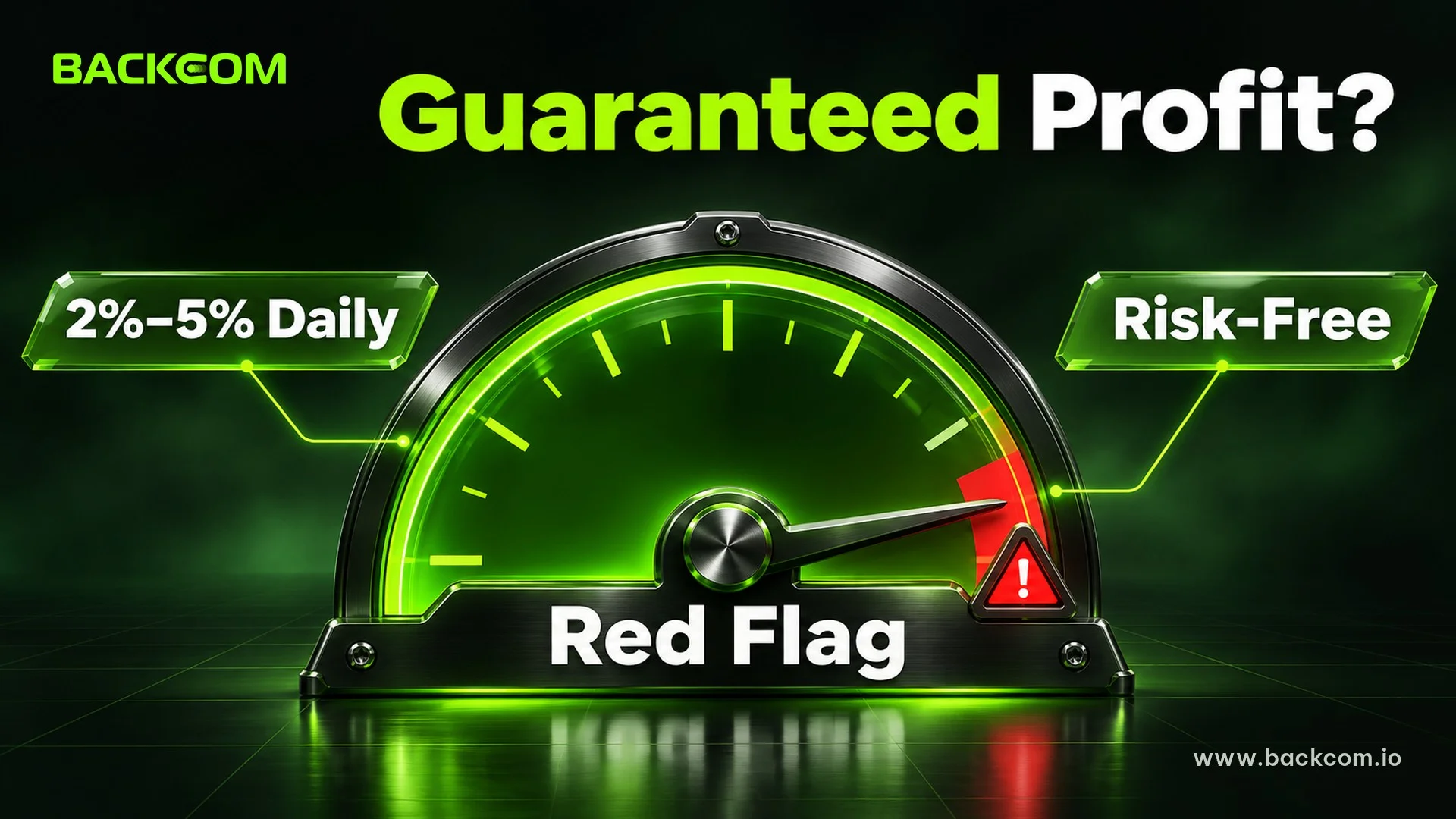
Guaranteed returns are the oldest red flag, and the easiest to check. No exchange, manager or bot can promise a fixed profit in a market that moves by several percent in a day. The US Federal Trade Commission puts it bluntly: "only scammers will guarantee profits or big returns", and crypto investments are not "low risk" in its guidance on cryptocurrency and scams.
Watch for wording that sounds like a product but works like a promise:
- "Daily returns of 2% to 5%" or any fixed percentage on deposits.
- "Risk-free arbitrage" or "AI trading bot that never loses".
- "Double your coins" offers tied to a deposit address or QR code.
A real exchange earns money from trading fees and charges you for products. It does not pay you a salary for holding your own money there. If the main pitch is the return rather than the service, treat the site as a fake until proven otherwise. For more on how real risk behaves, read our beginner guide to how crypto works.
2. Did A Stranger Send You There?
Many victims never find a fake platform by searching. Someone brings them to it. The FTC describes an "investment manager" who contacts you out of the blue and steers you toward an investment website that looks real but is fake, and it warns never to mix online dating with investment advice.
The usual routes look like this:
- A dating or friendship chat that slowly turns to "my uncle's trading platform".
- A messaging group where members post screenshots of profits.
- A social media ad or video with a celebrity who appears to endorse a platform.
- A cold message from a "support agent" or "recovery specialist".
Australia's securities regulator ASIC describes the same pattern: scammers recruit through social media ads, invite people into messaging groups and impersonate well-known figures, as set out in its scam alert on fake crypto-asset trading platforms. A simple rule follows. If a person you did not look for introduced the platform, do not deposit, however friendly they are.
3. Crypto Exchange Red Flags: Is The Company Registered Where It Claims?
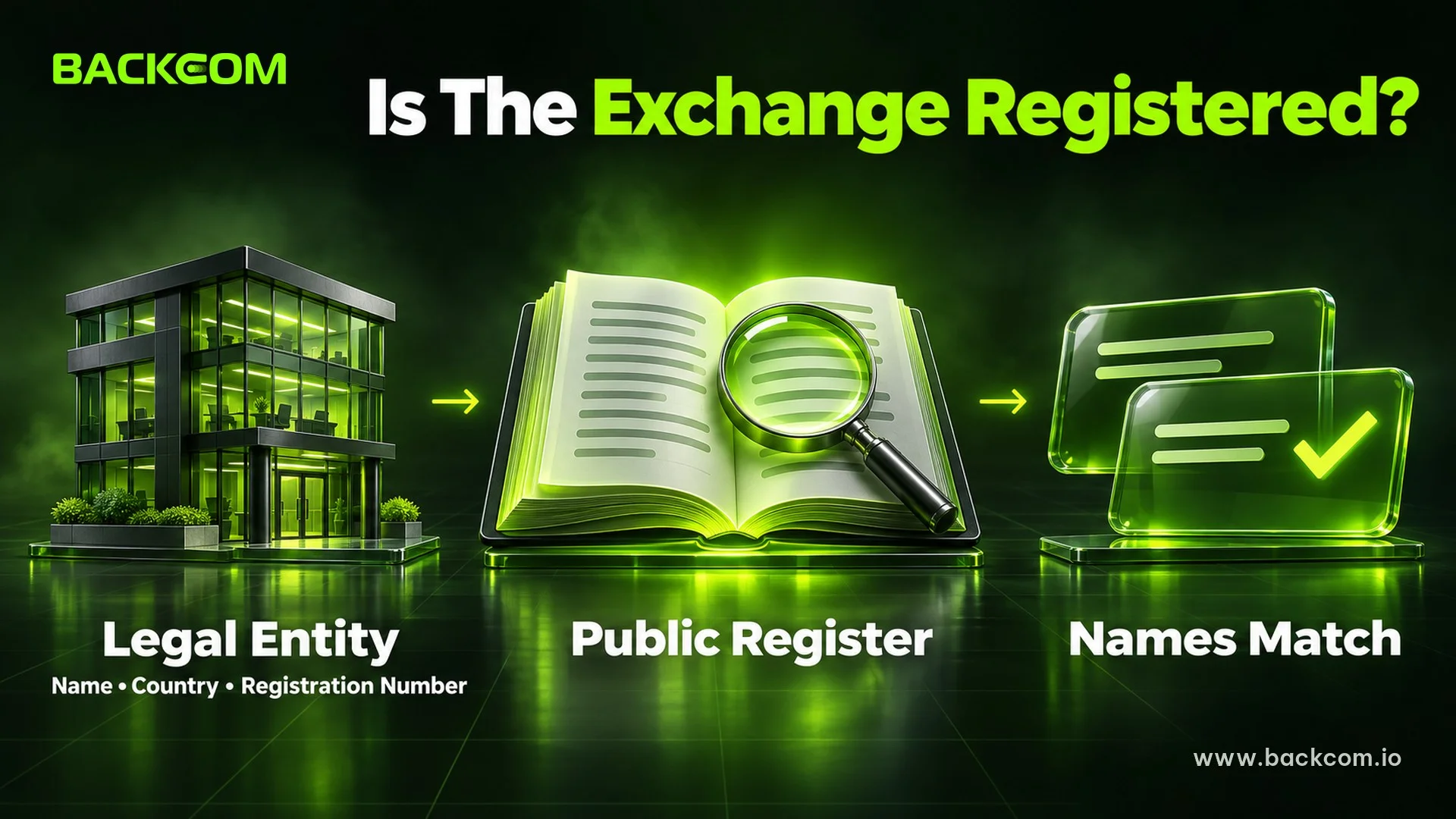
A real exchange can name the company behind it and the regulator that supervises that company. Fake platforms usually give a vague "global" address or copy a licence number from a different firm. This is one of the clearest crypto exchange red flags, because it can be checked outside the platform.
Check these points, using sources that do not belong to the platform:
- Legal entity: a company name, country and registration number in the terms of service.
- Register entry: search the regulator's own public register for that exact entity. In Australia, ASIC advises checking that a provider is on the AUSTRAC Virtual Asset Service Provider Register.
- Match: the name on the register must be the name on the site, not a similar one.
Licence rules differ by country, and many reputable platforms hold registrations in several places. What matters is that the claim can be verified. Be careful with logos of regulators placed in the page footer, because a logo proves nothing without a register entry. Our guide to forex broker scam warning signs uses the same verification logic for brokers.
4. Is Paying A Fee To Withdraw A Crypto Withdrawal Scam?
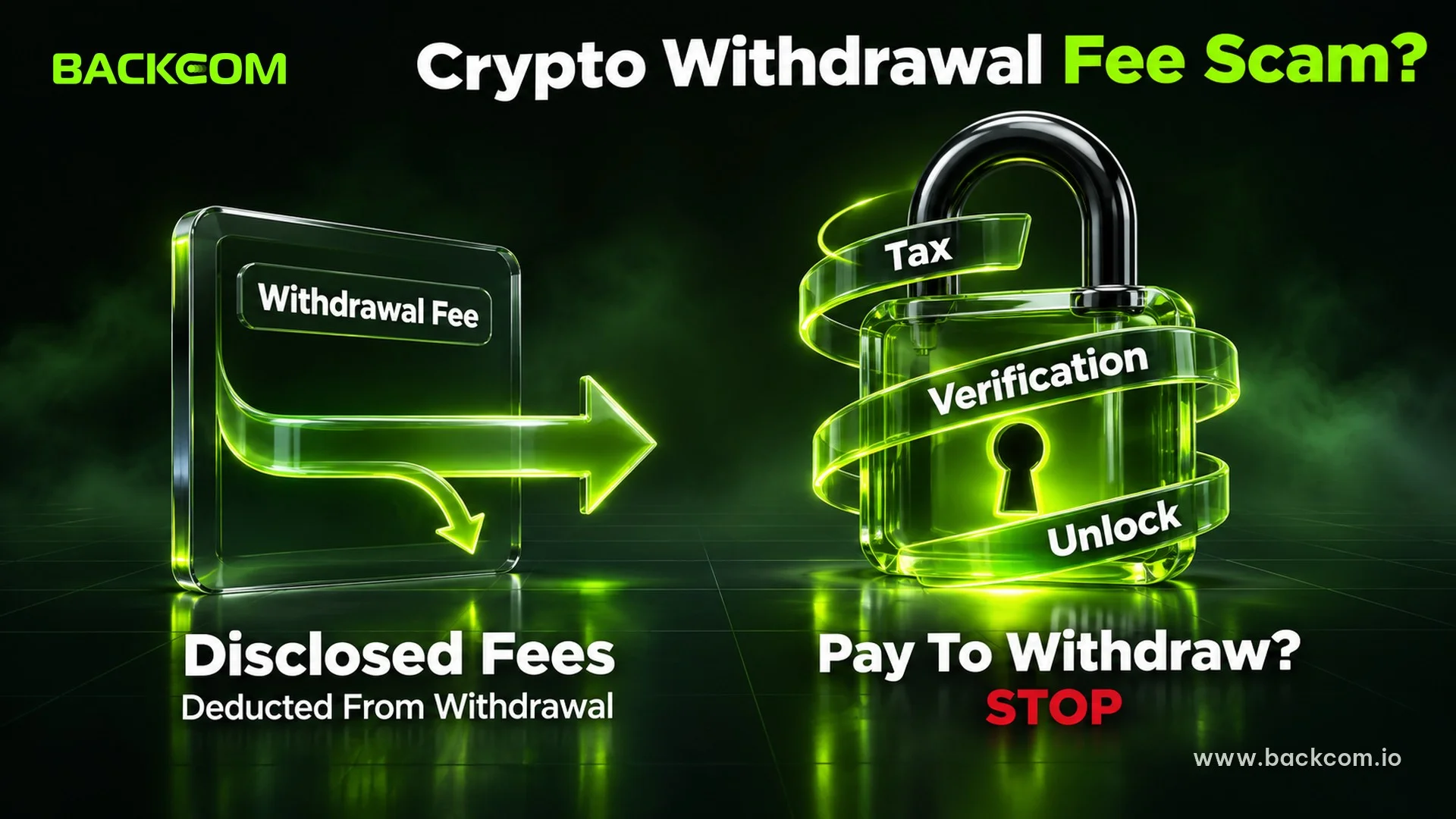
The crypto withdrawal scam is the moment most victims realise something is wrong. The platform shows a growing balance. You request a withdrawal, and a new "tax", "verification fee" or "unlock deposit" appears. You pay it, and another one follows.
ASIC explains that fake platforms display profits and trades, but "no real trading" takes place and the platform "contains fake data". When victims try to withdraw, they are asked to pay fees to release funds, and the fees go to the scammers. The FTC likewise notes that withdrawals can be blocked or require high fees.
Real exchanges do charge network fees and withdrawal fees, but they have four features that scam fees lack:
- The fee is shown in the fee schedule before you trade.
- It is deducted from the amount you withdraw, not demanded as a separate payment.
- It is small compared with the amount, and it is the same for everyone.
- Paying it never leads to another new fee.
If you are asked to send money to receive your own money, stop. Our guide to P2P deposit and withdrawal safety covers the safer ways to move funds in and out.
5. Are You Told To Pay In A Way That Cannot Be Reversed?
How you are asked to pay says a lot. The FTC is blunt: "Only scammers demand payment in cryptocurrency", and crypto transfers are hard to reverse. A legitimate exchange accepts deposits, but it does not make "pay this person's wallet" part of the account opening.
Be suspicious when:
- You are told to deposit to a personal wallet address sent by chat, not to an address generated inside your own logged-in account.
- A "manager" asks you to buy coins elsewhere and forward them.
- You are pushed towards a particular stablecoin network or a crypto ATM, with an agent on the phone guiding every step.
- The deposit address changes between visits, or you are asked to deposit again to "activate" the account.
Always generate the deposit address yourself inside your own account, compare the first and last characters before sending, and check the network. If you are unsure how tokens like USDT work, our explainer on stablecoins covers the networks and risks.
6. How To Spot Fake Exchange Websites And Apps That Look Almost Right?
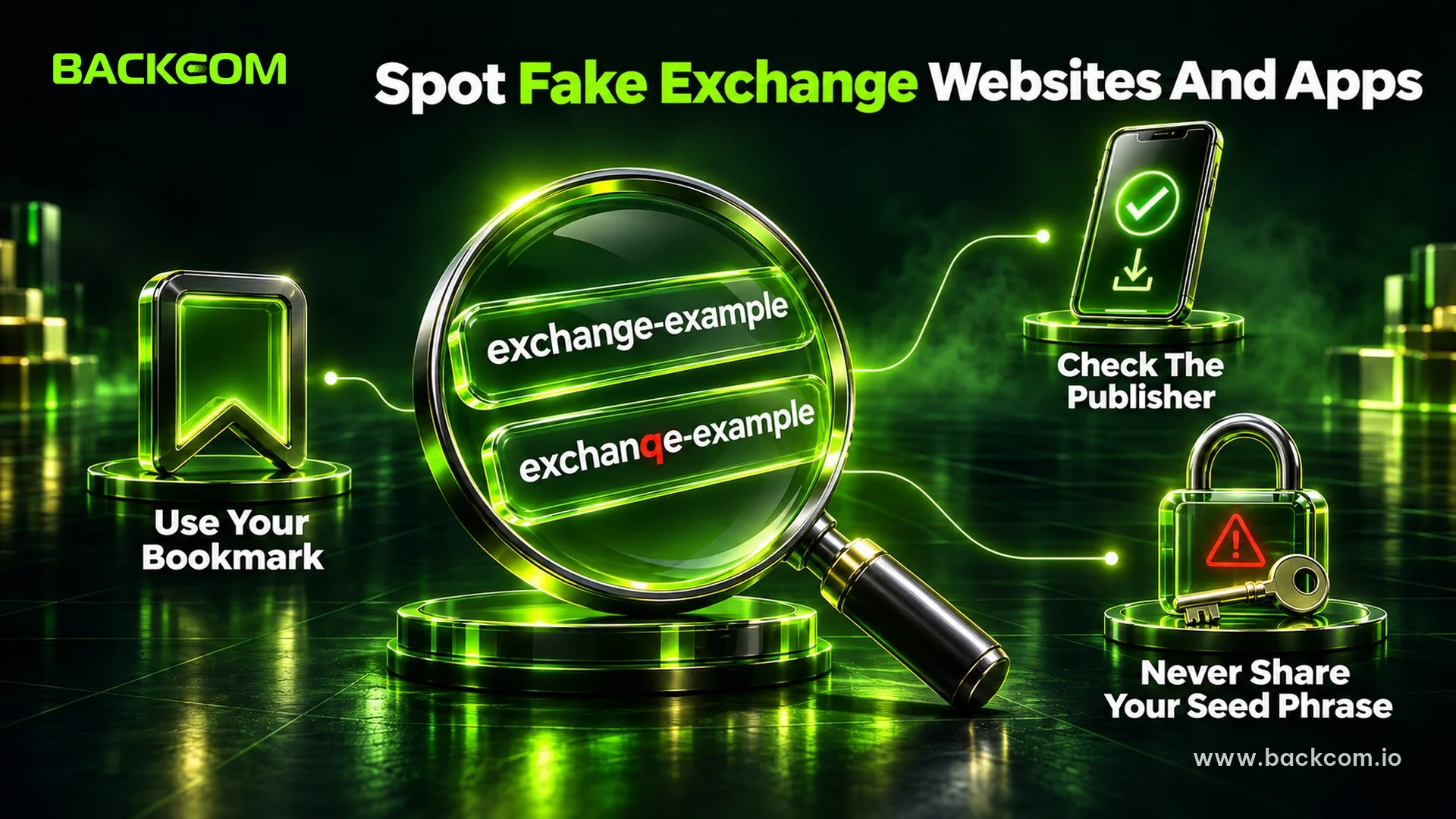
Many scams are not fake exchanges at all. They are lookalike copies of real ones, built to steal your login or to trick you into approving a transfer. This is the practical side of how to spot fake exchange websites and apps.
Run through this list before you log in:
- Address bar: read the domain letter by letter. Swapped letters, extra hyphens or an unusual ending are warning signs.
- How you arrived: type the address yourself or use a bookmark you made on a trusted device. Do not use a link from an ad, email or chat.
- App source: install only from the official store listing linked from the exchange's own site, and check the publisher name.
- Unexpected prompts: a pop-up that asks for your seed phrase, or a "wallet connect" request on a centralised exchange login, is not normal.
No genuine exchange ever needs your seed phrase or private key to run an account. Enable two-factor authentication using an app, set an anti-phishing code if the exchange offers one, and read the full checklist in our account security guide.
7. Are You Being Rushed?
Scams are timed. Pressure stops you from checking, so scammers build urgency into the pitch. Typical lines include "the bonus ends tonight", "your account will be frozen in one hour" and "only three places left". ASIC's advice is simple: do not feel pressured to invest, and do not give personal information to people offering investment tips on social media or in messaging groups.
Impersonation is a close cousin. The FTC warns that scammers pose as well-known companies, banks or government agencies and claim your account is at risk. The FTC says no legitimate business or government will demand payment in crypto to fix a problem. A real exchange support team does not call you, ask you to move funds to a "safe wallet" or ask for a one-time code.
A good habit is to let a day pass. Any real opportunity will still exist tomorrow. Use the time to read the terms, search the platform name with the words "scam" and "withdrawal", and talk to someone you trust who has no stake in it.
8. Fake Crypto Exchange Signs: Can Anyone Verify Who Holds Your Money?
The last of the fake crypto exchange signs is the hardest to see: nothing about the platform can be checked from outside. A transparent exchange has an identifiable company, a published team or board, clear terms, a working support channel and a history that shows up in independent sources.
Look for these:
- Track record: coverage and discussion from sources that are independent of the platform, including problems and complaints, not only praise.
- Terms of service: a named legal entity, a governing country and a clear description of what happens to your assets.
- Proof of reserves: some exchanges publish reserve reports. Treat them as one useful signal and not as an audit or a guarantee.
- Withdrawals: a platform that has handled many users' withdrawals for years is a better sign than a very new site with bonus offers.
Size is not safety either. Leverage and margin rules also decide how fast a position can be closed against you, as our guide to the crypto margin call explains. A famous exchange can fail, and a custodial exchange always carries counterparty risk because it holds your coins. Compare the trade-offs in our guide to centralized and decentralized exchanges, and do not keep more on any platform than you are prepared to lose.
9. How To Avoid Crypto Exchange Scams With A Small Test Deposit?
A test deposit turns trust into evidence. It follows from the red flags above: the only proof that matters is that money can leave as easily as it arrives.
- Deposit a small amount you can afford to lose, using the address generated inside your own account.
- Make a small trade and confirm the balance and the order history match.
- Withdraw the whole amount to a wallet or account in your own name.
- Check arrival and fees: the fee should match the published schedule, and no new payment should be requested.
- Only then scale up, in stages, repeating the withdrawal check when the amount grows.
A platform that pays out small amounts smoothly can still turn out to be a scam, because some fraud schemes allow early withdrawals to build trust. Treat a successful test as a minimum, not as permission to deposit a large sum. Copy-trading products and managed accounts need the same caution, as we explain in our guide to crypto copy trading risks.
10. What Should You Do If You Have Already Sent Money?
Stop sending money. Do not pay any new fee, and ignore anyone who offers to recover your funds for an advance payment, since recovery scams target earlier victims. ASIC says to contact your bank immediately if you have shared information or sent money.
Take these steps in order:
- Save evidence: screenshots, wallet addresses, transaction hashes, chat logs and website addresses.
- Contact your bank or payment provider if you paid by card or transfer, and ask about a chargeback or recall.
- Report it to your national fraud or cybercrime reporting centre. In the United States, that is the FBI's Internet Crime Complaint Center.
- Secure your accounts: change passwords, move assets from any wallet whose seed phrase you shared and enable app-based two-factor authentication.
- Tell people close to you. The FBI's Operation Level Up found that 76% of the 4,323 crypto investment fraud victims it notified did not know they were being scammed, so an outside voice can help.
Reporting rules and agencies differ by country, so look up the official channel where you live.
Frequently Asked Questions (FAQ) About Crypto Exchange Scams
How Can You Tell If A Crypto Exchange Is Fake?
Check who runs it and whether you can verify that from outside the site. A fake platform usually has no verifiable company, a copied licence, a recent domain, guaranteed returns and pressure to deposit. Search the regulator's public register for the exact legal name, and test a very small deposit and withdrawal first.
Why Do Scam Exchanges Ask For A Fee To Withdraw?
The fee is the final step of the scam. The balance on screen is fake, so the platform asks for a "tax" or "unlock deposit" to keep you paying. Real exchanges deduct network and withdrawal fees from the amount you take out and do not demand a separate payment first.
Is A Large Exchange Always Safe?
No. A large exchange is less likely to be a pure scam, but it still holds your assets as a custodian and can face hacks, outages or insolvency. Use two-factor authentication, keep only what you need on any platform and learn how withdrawals work before you rely on it.
Can You Get Money Back After A Crypto Scam?
Sometimes, but it is difficult. Crypto transfers are hard to reverse, so speed matters. Contact your bank at once, keep all evidence and report the case to the authorities in your country. Be wary of anyone who offers recovery for an upfront fee, because that is a common second scam.
Conclusion: Verify First, Deposit Second
The best answer to how to avoid crypto exchange scams is a habit, not a tool. Check who runs the platform, refuse guaranteed returns, never pay to withdraw, read every web address and test with a small amount before you deposit more. If one of the eight red flags appears, stop and verify it outside the platform. Backcom.io publishes educational material only and cannot vouch for any particular site, so rely on official registers and your own checks.
Disclaimer: This content is compiled by Backcom.io for information only and is not investment advice. Crypto assets are volatile and carry a high risk of loss, including loss from fraud. Regulations and reporting channels differ by country, so check official sources where you live before you act.
Was this article helpful?
Join The Backcom.io Community
Get the latest on trading rebates, trading tips, and broker deals — and connect with thousands of traders worldwide.

Backcom App
Track Your Rebates Every Day
Every rebate is visible by broker and by day. Manage your wallet and withdrawals in one place.
Open Backcom App