OKX Withdrawal Fees: How Network Fees Work, Limits And Ways To Cut Costs

When you send coins off OKX to a wallet or another exchange, a fee comes out of the transfer. It is not a hidden charge. It is a network fee that depends on the blockchain you pick, and the exact figure appears on your withdrawal screen before you confirm. This guide explains OKX withdrawal fees from the source: why they differ by network, how to read the live number, how withdrawal limits and security locks work, and which habits keep the cost down. In this article, Backcom.io also separates withdrawal costs from trading fees, because the two are easy to mix up.
OKX does not publish a single fee you can copy. According to the OKX guide on making a withdrawal, the network fee "can vary between networks and is determined by blockchain". So instead of listing numbers that may be stale tomorrow, this article shows you where the current figure lives and how to compare routes.
What Are OKX Withdrawal Fees, And What Decides Them?
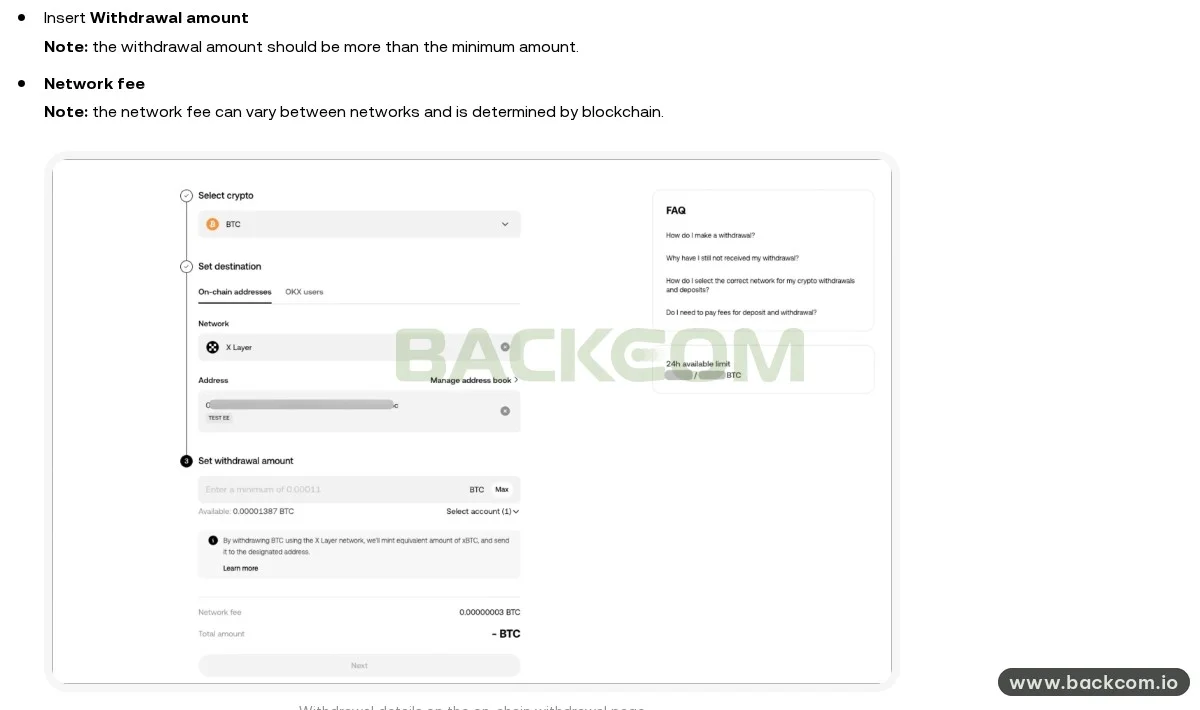
OKX withdrawal fees are the network fees deducted when you move crypto to an address outside the platform. The fee is set by the blockchain you choose, not by the size of your balance, and OKX shows it in the withdrawal form together with the amount you will receive.
Three details from the official help pages matter in practice:
- The fee is shown before you confirm. The withdrawal guide lists a network fee line on the form, so you can compare it before you submit.
- The fee depends on the network. The same coin can cost different amounts on different chains, because each chain prices its own transactions.
- A minimum applies. The same guide states that the withdrawal amount must be more than the minimum amount for that coin and network.
The practical rule is simple. A figure you saw last month in a blog post or a screenshot is a reference at best. The number on your own screen, at the moment you confirm, is the only one that counts.
OKX Network Fee: Why The Number Differs By Chain

An OKX network fee follows the cost of the underlying blockchain. Each chain prices block space differently, and the price rises when more people compete for the same space.
Bitcoin: The Fee Follows Transaction Size
The Bitcoin developer documentation states that transactions pay fees based on the total byte size of the signed transaction, not on the amount sent. It adds that the fee per byte is set by current demand for space in mined blocks. Sending a small amount and a large amount therefore costs about the same, which is why small Bitcoin withdrawals feel expensive.
Ethereum: Base Fee Plus Priority Fee
The ethereum.org gas documentation describes the total as units of gas used multiplied by the base fee plus the priority fee. The protocol sets the base fee, and it can rise or fall by a maximum of 12.5% per block. The priority fee is a tip that depends on network usage at the moment you send. Ethereum also charges the fee whether the transaction succeeds or fails.
Other networks use their own fee models. That is why a stablecoin like USDT can show very different fees from one network to the next, and why choosing the network matters more than the amount you send.
How To Check The OKX Withdrawal Fee USDT Before You Confirm
The OKX withdrawal fee USDT is the figure most traders look for, because USDT moves across several networks. The method below works for any coin.
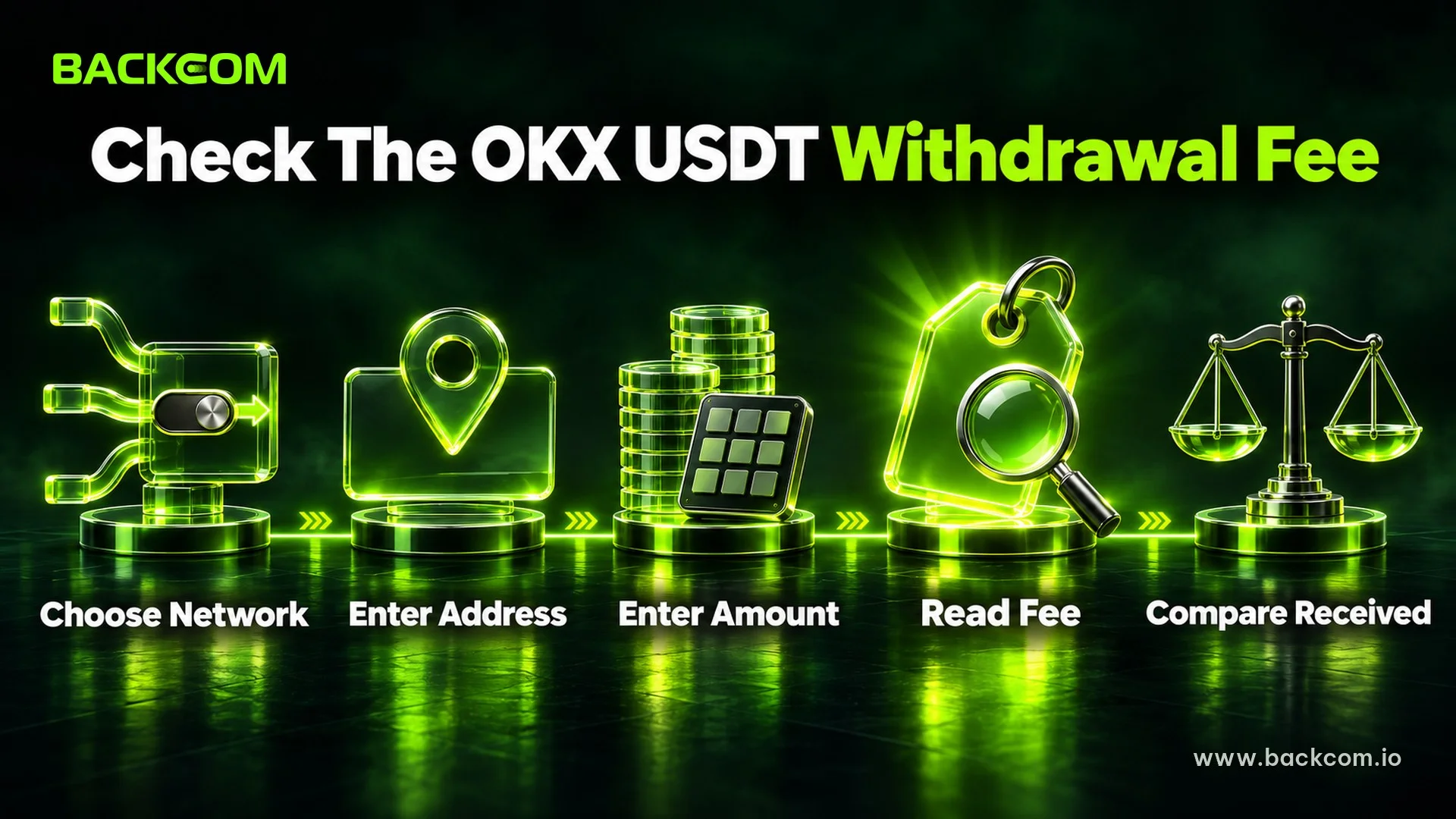
- Open the withdrawal page for the coin from your OKX account.
- Choose the network that matches where the funds are going. Do not choose by price yet.
- Enter the address and, if the receiving platform requires one, the tag or memo.
- Type the amount. The form then shows the network fee for that route.
- Compare the net amount with what the receiving side expects before you confirm.
If the receiving platform accepts two networks for the same coin, run the steps twice and compare. The cheaper route is only the better one if the receiving platform accepts it.
The OKX guide on unsupported assets is clear about this: make sure the network and the coin are supported by the recipient's platform or wallet. Its example is USDT: if you choose the Tron network, the receiving address must be a USDT address on the Tron network. The withdrawal guide adds that a wrong network can lead to lost assets.
For a broader look at how exchanges price withdrawals, our guide to crypto withdrawal fees explained covers the general mechanics, and the stablecoin guide explains how USDT and USDC differ.
OKX Withdraw To Another Exchange: Match The Network First
An OKX withdraw to another exchange is the same flow, with one extra step: open the deposit page on the receiving exchange first. Copy the address, note the network it expects, and check whether it needs a tag or memo. The OKX withdrawal guide warns that some assets, XRP for example, need a tag, otherwise the withdrawal will be lost.
Only then return to OKX and select the matching network. If you are moving USDT to a forex broker, the same logic applies, and our USDT deposit checklist for forex brokers lists the checks worth running first.
OKX Withdrawal Limit: What Controls How Much You Can Move
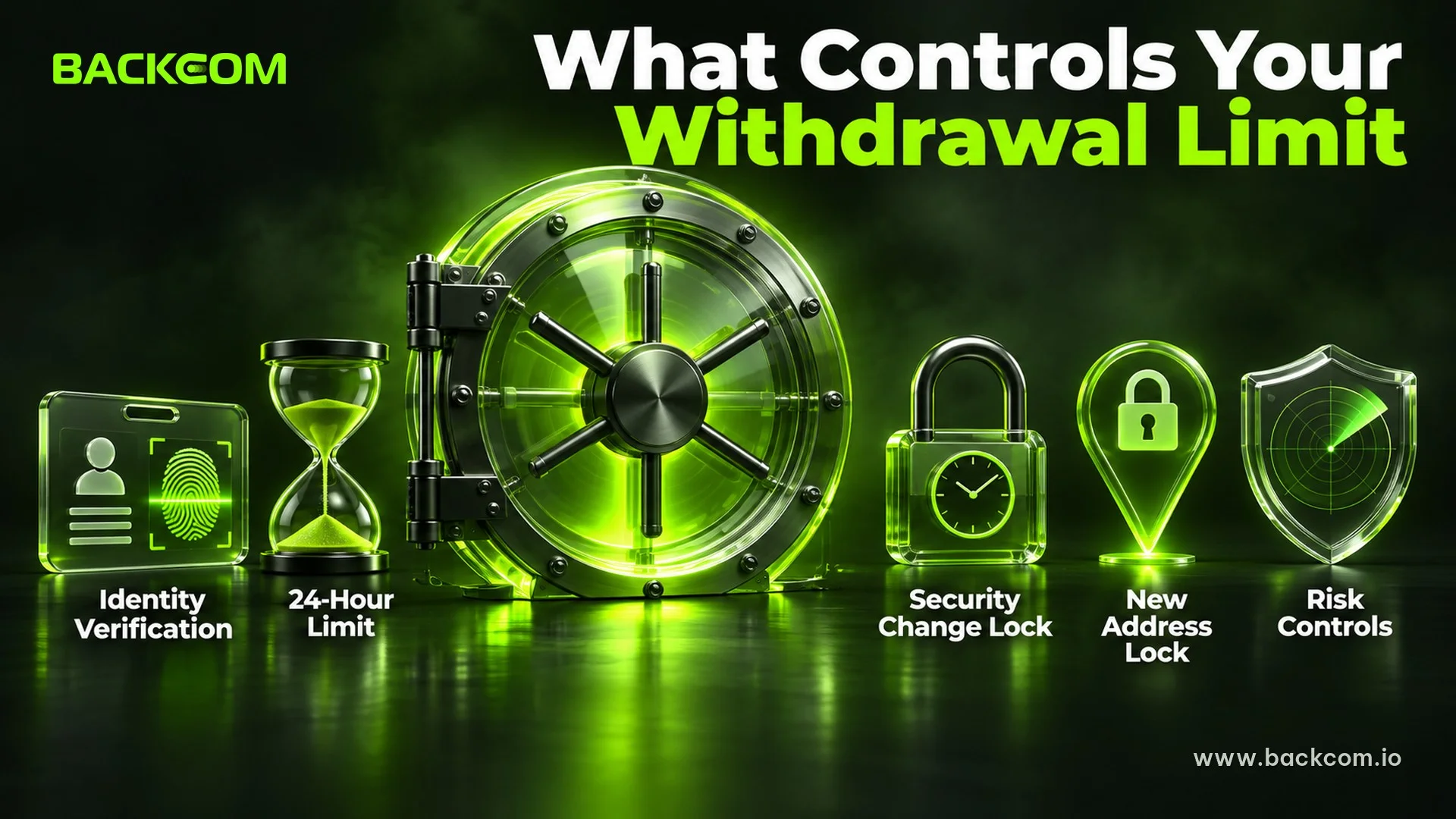
The OKX withdrawal limit is not one fixed number. Several controls can restrict a withdrawal, and the OKX page on why you cannot withdraw is the best place to read them. This section summarises what it states, as shown on the page on 23 November 2026.
- Identity verification. The page says you are required to complete identity verification to make withdrawals.
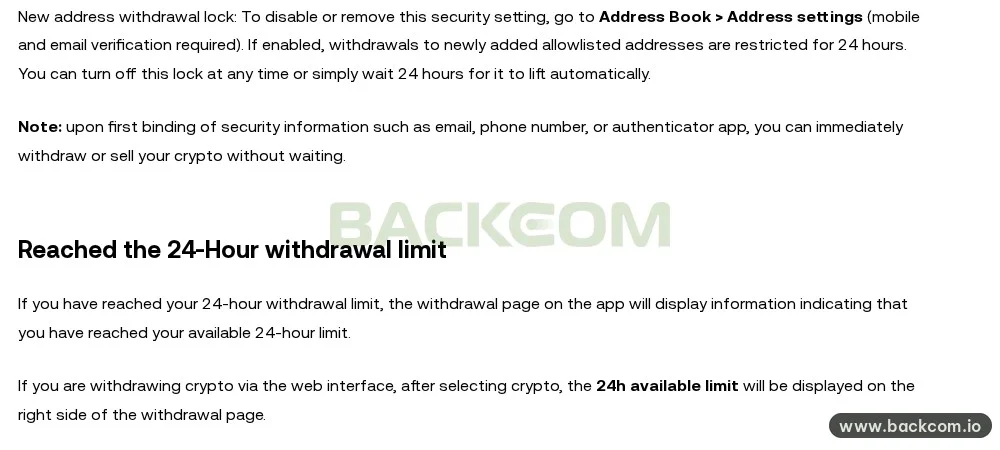
- The 24-hour limit. If you reach your 24-hour limit, the app shows that you have reached your available limit. On the web, the available 24-hour limit appears on the right side of the withdrawal page, so you can read your own figure there.
- Security locks. Withdrawals are restricted for 24 hours after you change an authentication method, and not allowed within 24 hours after changing your login password.
- New address lock. If the setting is enabled, withdrawals to newly added allowlisted addresses are restricted for 24 hours.
- A limit you can set yourself. According to the OKX Large Withdrawal Protection FAQ, KYC-verified main accounts can set a personal 24-hour cumulative limit between 10,000 and 10,000,000 USD, and withdrawals above it require facial verification.
- Risk controls. The page also describes a 48-hour restriction for high-risk addresses and a double-spending control that limits withdrawals only for the amount tied to a deposit.
OKX does not print your limit in the help pages, because it depends on your account. Read the figure on your own withdrawal page, and plan large transfers so that a 24-hour lock does not land on the day you need the funds.
The 30-Day Address Verification
OKX also lets you verify a saved address for 30 days. According to the OKX note on address verification, you must make at least one withdrawal to that address within the 30-day period to keep it verified, and you can choose a permanent verification instead when you set it up. It is a small habit worth knowing if you use the same destination every week.
OKX Internal Transfer: When Moving Funds Costs Nothing
An internal transfer is the one case where the network fee disappears. The withdrawal guide says you can transfer crypto instantly with zero fees to OKX users. The recipient is entered by phone number, email, sub-account or UID, and the recipient needs to be a verified user.
Two more points from that guide:
- You can cancel within one minute and no fees are charged.
- Once a normal withdrawal shows In Progress or Transferred Out, it cannot be cancelled on OKX.
Internal transfers do not help when the destination is a hardware wallet, a DeFi protocol or another exchange. For those you are back to a normal withdrawal with a network fee.
Six Ways To Lower What You Pay To Withdraw
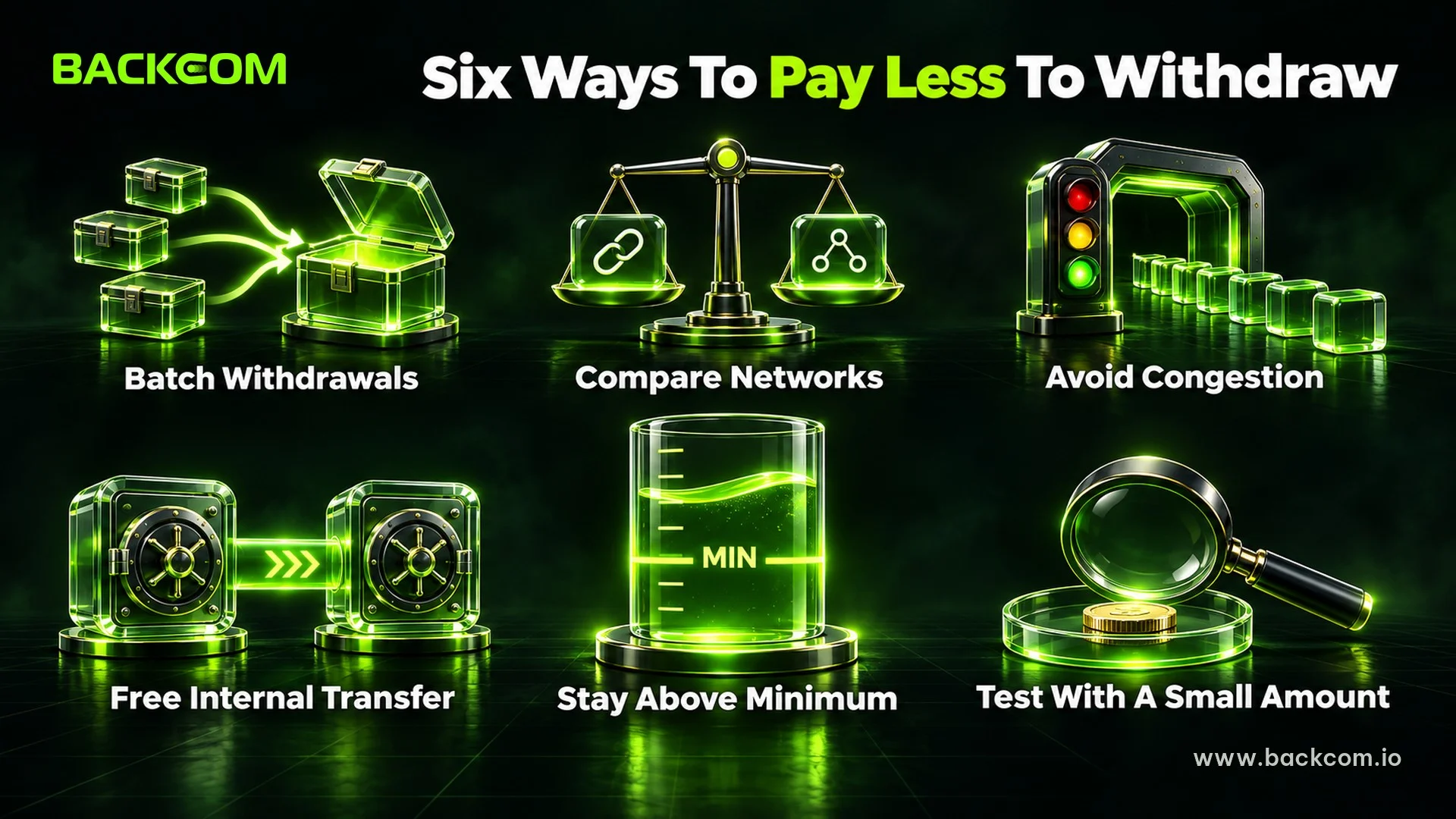
You cannot negotiate a network fee, but you can control how often you pay it and which route you use.
- Withdraw less often, in larger amounts. The Bitcoin fee depends on transaction size, not value, so one consolidated transfer usually costs less than several small ones.
- Compare supported networks. If the receiving platform accepts two networks for the same coin, compare the displayed fee and net amount, then pick the compatible and cheaper one.
- Avoid busy periods when the transfer is not urgent. Fees follow congestion, so waiting can lower the cost on networks like Ethereum, where the base fee moves with demand.
- Use internal transfers where they apply. Moving funds between OKX users costs nothing in fees.
- Keep the amount above the minimum. This avoids rejected requests and stuck leftover balances.
- Test a small amount first for a new destination. Paying the fee twice costs less than losing a large transfer.
Here is a purely illustrative calculation, with invented figures. If the screen showed a 2 USDT fee on a 20 USDT withdrawal, 10% of the amount would go to the network. The same 2 USDT fee on a 1,000 USDT withdrawal would be 0.2%. The sooner you consolidate, the less the fee weighs.
Fee share (%) = Network fee ÷ Withdrawal amount × 100
What To Do When An OKX Withdrawal Is Delayed
Delayed is not the same as lost. The OKX guide on a withdrawal the other platform did not receive describes three stages: OKX sends the funds, block miners confirm the transaction, and the receiving platform credits it. Once the block is confirmed, give the hash to the receiving platform and ask its support team.
Account-level reviews can add time too. The OKX note on segregated wallets says this may cause delays of up to 24 hours, and that cancelling and resubmitting will not speed it up. So wait, rather than resubmitting.
Withdrawal Fees Versus Trading Fees: Where OKX Rebates Fit
Withdrawal fees and trading fees are different costs with different owners. The network fee belongs to the blockchain. The trading fee is what OKX charges on each Spot or Futures order, and it is the one that grows with your activity. Our OKX trading fees guide lists maker, taker and funding costs by tier, and the maker versus taker guide shows how order type changes the bill.
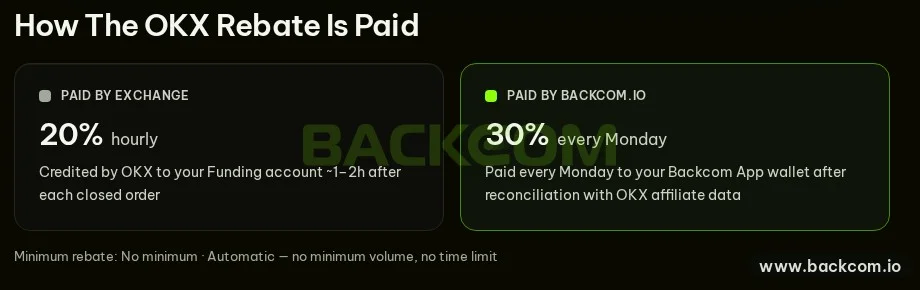
A rebate programme applies to the trading fee, not to the withdrawal fee. On the OKX Rebates page, the programme returns up to 50% of trading fees on Spot and Futures: 20% credited by OKX about one to two hours after an order closes, and a further 30% paid every Monday, with no minimum. The page was last updated on 23 October 2026, and it states that fees paid before linking are not returned retroactively. It does not reduce what you pay to withdraw. If you trade often, that is where costs add up faster than a few network fees.
Check the current terms and the rules for existing accounts on the OKX Rebates page before you decide.
Backcom.io is an independent introducing broker (IB/affiliate) of OKX. The 20% share is credited by OKX about one to two hours after each closed order, and the 30% Monday share is paid from the commission OKX pays Backcom.io. See the risk disclaimer for details. Crypto trading is high risk, and a rebate lowers your cost but does not make a losing strategy profitable. For a wider view of the exchange itself, see our OKX safety and fees review.
Frequently Asked Questions (FAQ) About OKX Withdrawal Fees
Does OKX Charge A Fee To Withdraw Crypto?
Withdrawals to an outside address carry a network fee, which OKX says varies between networks and is determined by the blockchain. The fee appears on the withdrawal form before you confirm. Transfers to another OKX user are described as zero fee.
Why Is The OKX Network Fee Different For Each Coin And Chain?
Each blockchain prices its own transactions. Bitcoin charges by transaction size and demand for block space, while Ethereum combines a protocol-set base fee with a priority tip. The same stablecoin can therefore show two different fees on two networks. Pick the network your destination supports, then compare the displayed fee.
Is There A Free Way To Withdraw From OKX?
Only an internal transfer to another verified OKX user, which OKX describes as instant and zero-fee. Sending to any external address, including another exchange, involves a network fee.
What Is The OKX Withdrawal Limit?
It depends on your account, so OKX shows it on your own withdrawal page rather than in the help articles. On the web, the available 24-hour limit appears on the right side of the page. Identity verification is required, and security changes can trigger a 24-hour lock. OKX also lets KYC-verified main accounts set their own 24-hour limit between 10,000 and 10,000,000 USD, with facial verification above it.
Can I Cancel An OKX Withdrawal To Get The Fee Back?
You can cancel within one minute of requesting an internal transfer and no fees are charged. Once an external withdrawal shows In Progress or Transferred Out, OKX says it cannot be cancelled, so check the address, network and tag first.
Conclusion: Read The Live Fee, Choose The Right Network
OKX withdrawal fees are network fees that move with the blockchain, so the number on your own screen at the moment you confirm is the one to trust. Choose the network your destination supports before you compare prices, keep amounts above the minimum, consolidate transfers, and use internal transfers when the recipient is on OKX. Treat trading fees as a separate cost with their own tools, including the rebate programme described above.
Disclaimer: This content is compiled by Backcom.io for information only and is not investment advice. Fees, limits and terms change without notice; always check the current figures on the OKX withdrawal page. Crypto assets are volatile and carry a high risk of loss.
Was this article helpful?
Join The Backcom.io Community
Get the latest on trading rebates, trading tips, and broker deals — and connect with thousands of traders worldwide.

Backcom App
Track Your Rebates Every Day
Every rebate is visible by broker and by day. Manage your wallet and withdrawals in one place.
Open Backcom App