Forex Cashback Vs Rebate: Are They The Same And What Should You Check Before Signing Up

Search for a rebate program and you will see two words used almost at random: cashback and rebate. Many traders wonder if forex cashback vs rebate is a real choice or only a marketing label. In most cases it is a label, but the details behind it are not always the same.
This matters because the word on the banner tells you little about who pays, how much and when. Two programs can both say "cashback" and work in very different ways.
In this article, Backcom.io separates the terms, shows where the money comes from and lists the checks to make before you sign up. For the full background, see what a forex rebate is.
1. Are Forex Cashback And Rebate The Same Thing?
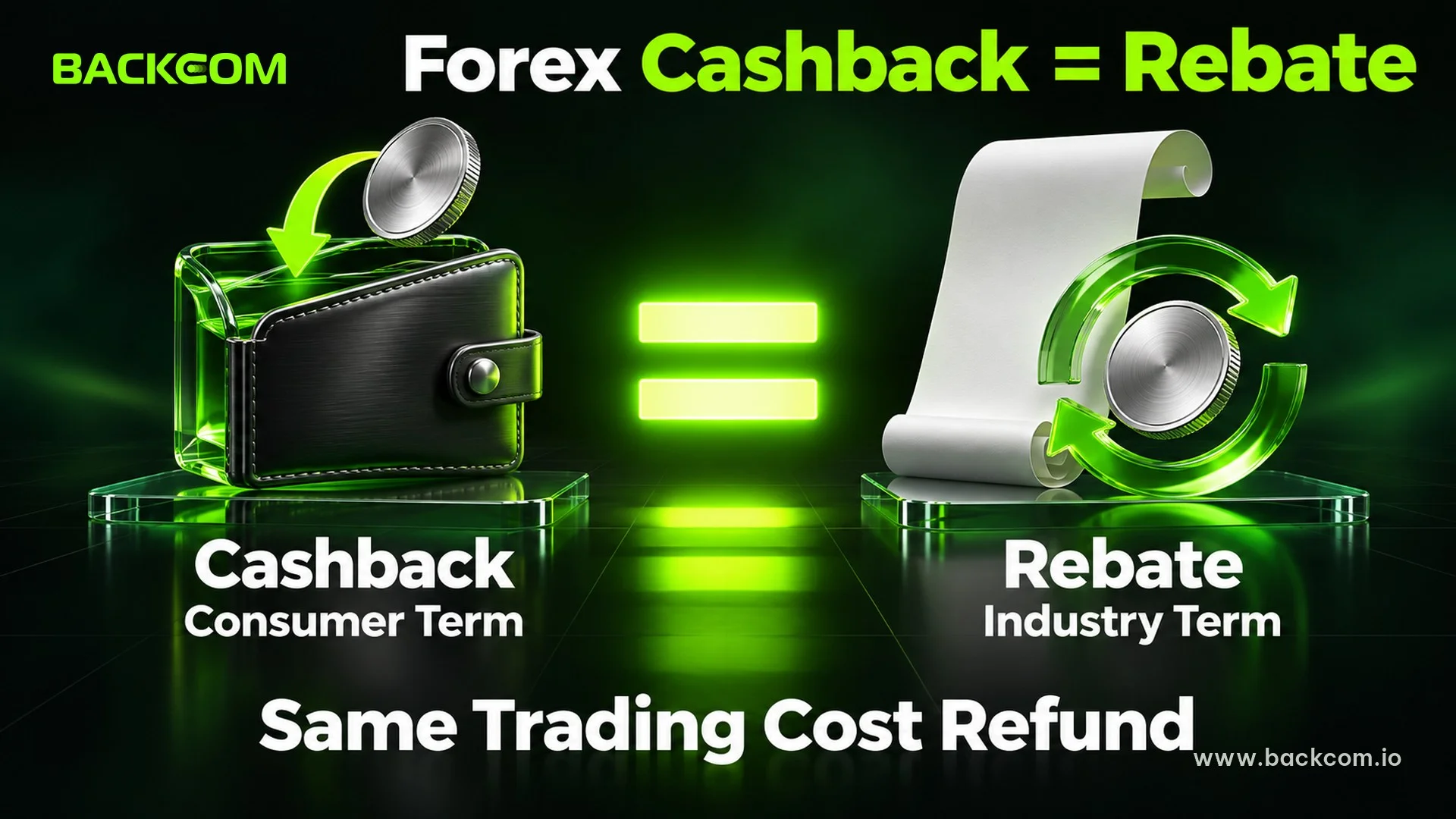
Forex cashback is a partial refund of your trading costs, paid after you trade, and forex rebate is the more technical name for the same refund. In everyday use the two words describe one payment: money that returns to you for each trade you close.
Research on the topic confirms this. EarnForex describes a rebate program as a cashback program that rewards you for trading, and many provider pages use both words for the same payment. Checked on 14 November 2026.
The difference is usually in the wording, not in the maths:
- Rebate: the term used in the industry, often tied to an introducing broker (IB) and a per-lot rate.
- Cashback: the consumer term, often used in marketing and on comparison sites.
- Cash back on a promotion: a one-off offer from a broker, which can be a different product, so read its terms.
Treat the label as a hint, not a definition. Ask what is paid, per what unit and on which schedule, and ignore the word on the banner.
Forex Cashback Meaning In Plain Terms
The forex cashback meaning is simple: you trade, the position closes, and a small amount of money comes back to your account or wallet. The size of that amount depends on your volume, not on whether the trade made a profit.
Think of it like a loyalty refund on a card, with one difference. A card refund is a percentage of what you spend, while a forex refund is usually a fixed amount per lot. That is why the same label can hide two different calculations, and why you should always ask for the unit.
A short example shows the problem. Program A says "cashback up to 50%" and gives no table. Program B says "USD 3 per lot" and lists every account type. Only program B lets you work out what 20 closed lots would return, which is USD 60 at the stated rate. Program A cannot be tested until you know what the 50% applies to.
2. Who Pays The Money: The Broker Or An Introducing Broker?
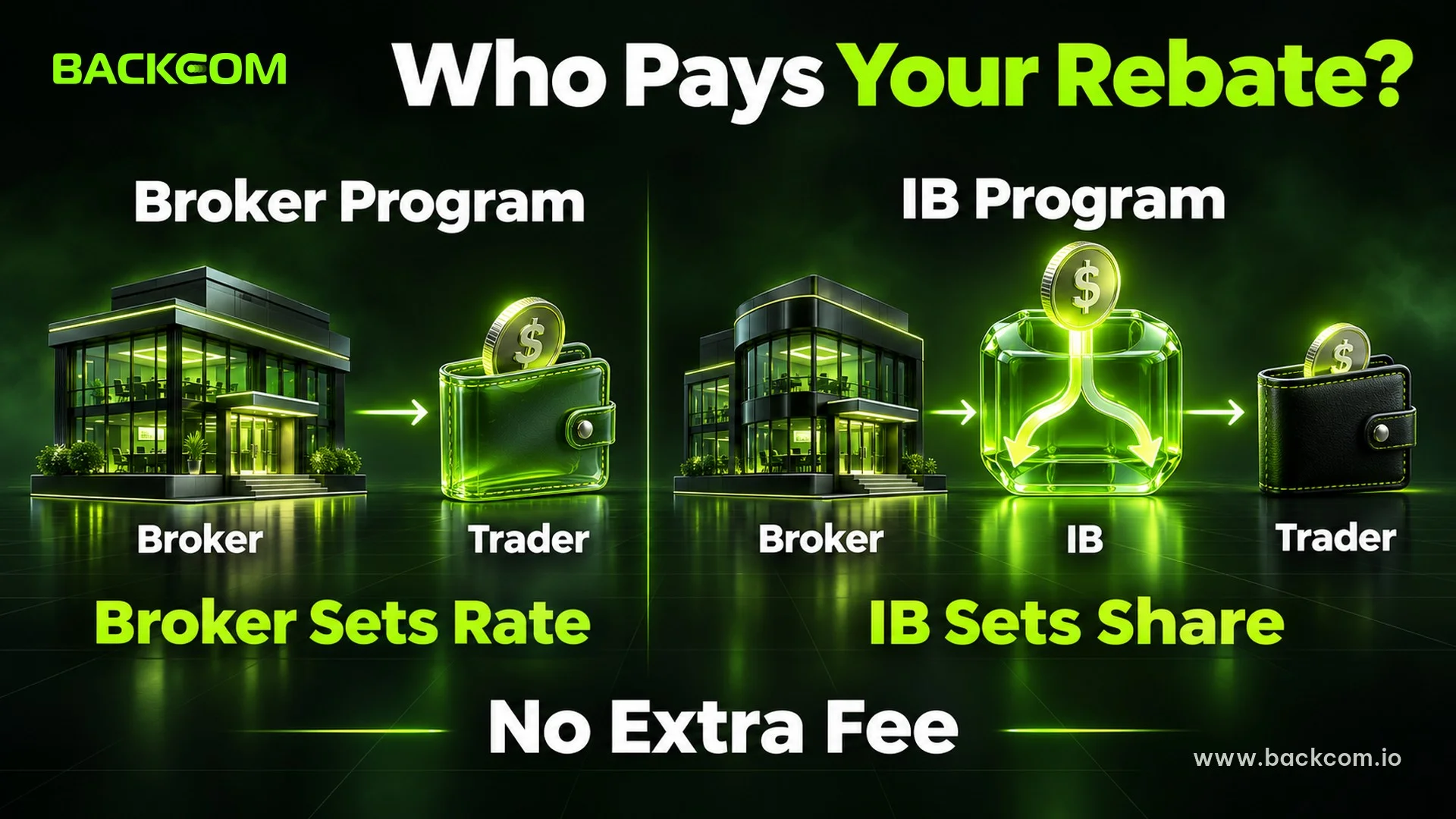
Rebates reach you by two routes, and the route decides how the program behaves. In both cases the money comes from the spread or commission you already pay, so you do not pay anything extra to receive it.
| Route | Who pays you | How it is set |
|---|---|---|
| Broker program | The broker pays you directly. | The broker sets the rate and schedule. |
| IB or affiliate program | The broker pays the IB, and the IB shares part with you. | The IB sets the share, often per lot. |
In the second route, the broker pays a commission to the IB for the clients it introduced. This payment is the IB commission. A rebate is the part of it that the IB passes back to the trader.
The guide to the IB role states the relation clearly: the IB commission is what the broker pays the IB, and the rebate is what the trader receives from it. They sit on the same flow of money, at opposite ends.
A provider can return a small part of the IB commission, or most of it. The top level is 100% of the IB commission, not 100% of your trading fee, and the exact figure depends on the account type and product. Rates change, so confirm the current figure on the broker rebate page before you register.
Because the money passes through one more party, the IB route needs one more check: who receives the commission and when you can see your share.
3. Forex Rebate Vs Commission: How Do They Differ From A Spread Discount?
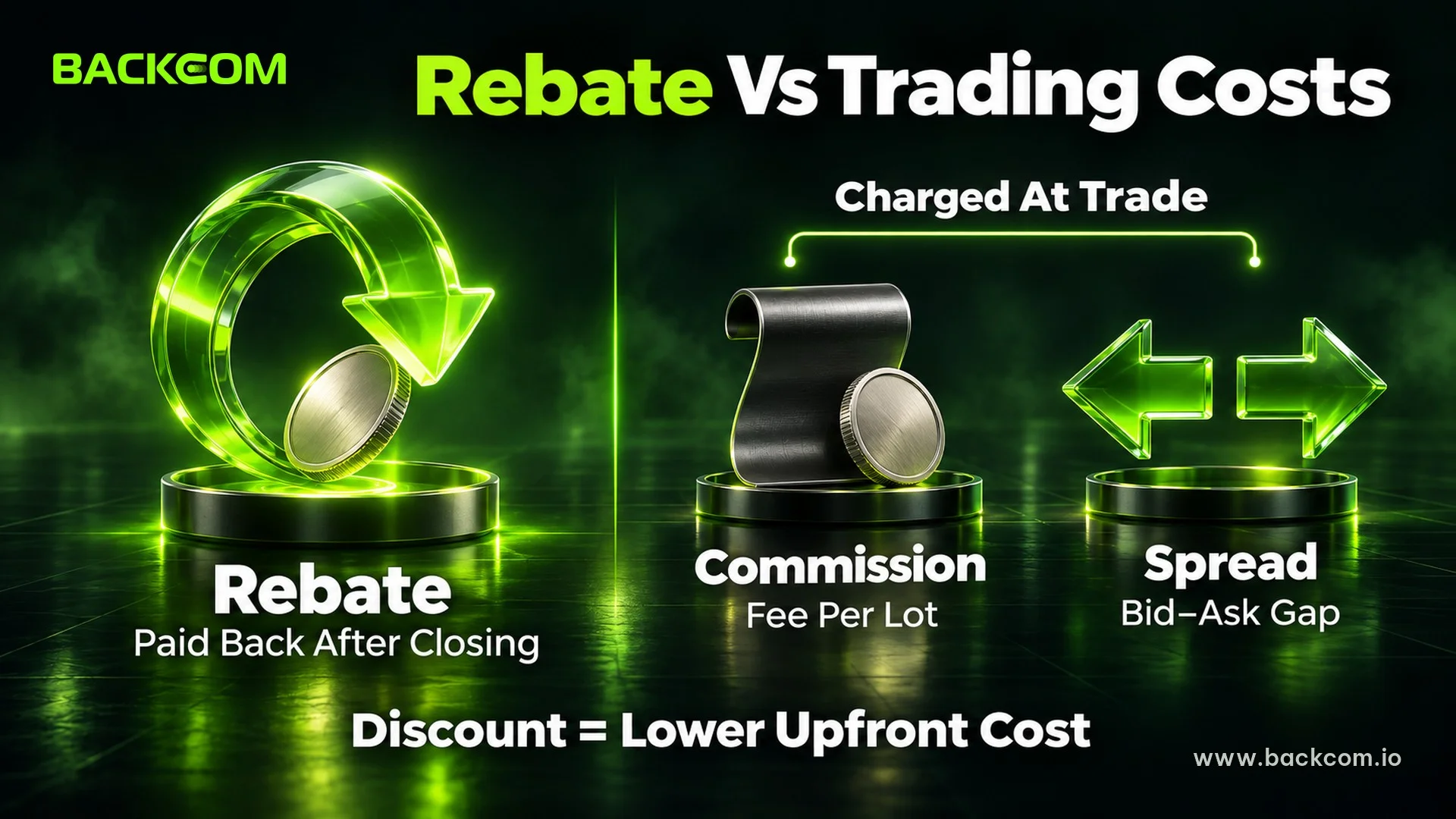
Rebate and commission is the most common mix-up, because both are quoted per lot and both are tied to the same trade. A rebate is money returned after the trade, while a commission and a spread are costs charged at the trade. They are not the same item, even though the net effect on your cost can look alike.
Use these three terms as a base:
- Commission: a fee the broker charges per lot on some account types, charged when the order fills.
- Spread: the gap between the buy price and the sell price, built into the quote.
- Rebate: a payment you receive after the trade closes, which lowers your net cost.
According to EarnForex, the rebate can come in several shapes: a lump-sum payment, a reduction in the spread, or a fixed amount per lot. It lists a spread reduction of roughly 0.1 to 1.3 pips and a commission rebate of about 1 to 4 USD per lot as common ranges. These are general ranges from one source, not a rate for any broker, so check the actual figure with each provider.
A Discount Is Not Always A Rebate
A broker that simply lowers its commission on an account is giving a discount, not a rebate. The result looks similar, but nothing is paid back to you afterwards, and nothing in your wallet shows the saving.
This matters when you compare offers. A "cashback" that lowers your spread is a pricing change, so its effect is visible only in the quotes. A per-lot rebate is a separate payment that you can track entry by entry.
A rebate does not change the quotes or the execution of your orders. It lowers your cost per lot after the fact, and it does not improve the result of a single trade.
4. Forex Rebate Vs Bonus: What Is The Difference?
Rebate and bonus is the second mix-up. A bonus is promotional credit set by the broker, and a rebate is a share of commission paid on volume. People often confuse them because both appear on the same banners.
The guide to no deposit bonuses explains the split:
- Bonus: usually credit rather than cash, tied to conditions such as volume, time and verification, and normally removed at withdrawal.
- Rebate: follows your closed volume, whether trades win or lose, and does not depend on a promotion.
Availability also differs by region. Both can be restricted for retail clients under some regulators, so the broker entity that holds your account decides what you can receive.
If a page says "cashback" and also asks you to hit a turnover target before you can withdraw, you are probably looking at a bonus. Read the terms before you act.
5. What Should You Check Before You Sign Up To A Cashback Or Rebate Program?
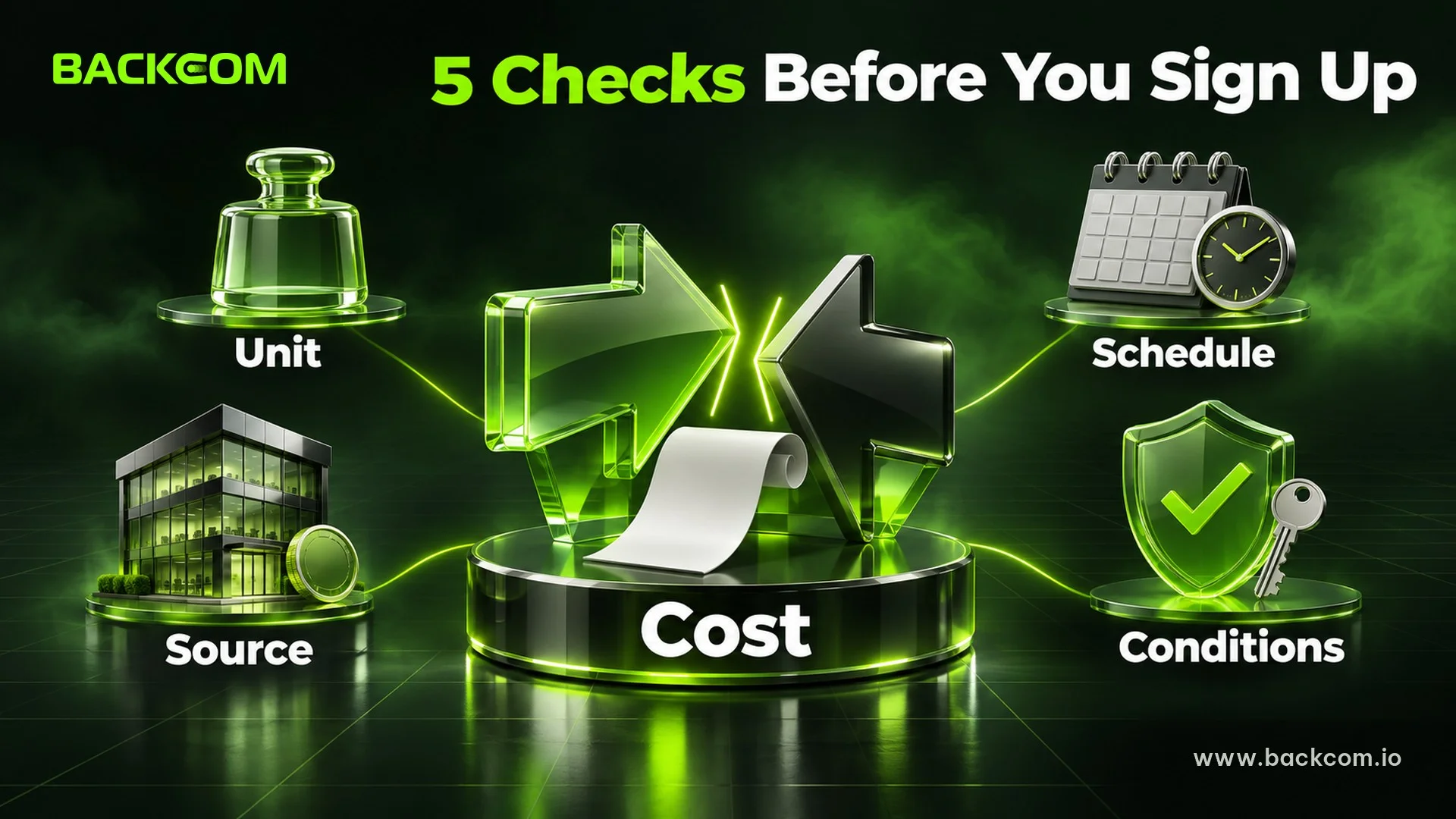
Check five things before you register. Each one takes a few minutes, and together they show whether the program is a real rebate or only a label.
- The unit: is the payment per lot, a percentage of spread, or a flat amount? You cannot compare programs without the same unit.
- The source: does the broker pay you, or does an IB share its commission? The second route is common, and it needs the provider's own terms.
- The schedule: is it daily, weekly or monthly, and where does the money arrive? The program guide lists payout windows as at 7 November 2026.
- The conditions: which account types qualify, and are some excluded?
- The cost side: does the link add spread? A higher rebate with a wider spread may not lower your net cost.
Winning and losing trades both count, because a per-lot rebate is paid on closed volume. The per-lot formula is explained in the rebate guide, and the forex rebate calculator guide applies it across brokers and monthly volumes.
If the checks look good, you can create a rebate account and link a trading account after you register with the broker.
Disclosure: Backcom.io is an independent introducing broker (IB/affiliate) of the brokers listed on its pages; rebates are paid from the commission the broker pays Backcom.io. See the risk disclaimer.
How To Compare Two Programs Fairly
Put both programs on the same line before you decide. Use one account type, one instrument and one month of volume that matches your own trading, then work out the net cost for each.
For example, a trader closes 15 lots on gold in a month. Program one returns an assumed USD 4 per lot, and the link keeps the standard spread. Program two returns USD 5 per lot, but the link adds a markup to the spread. The first returns USD 60, the second USD 75. If the markup costs more than USD 15 over those 15 lots, the second program is the more expensive one, even with the higher rebate.
Use your own numbers, and treat these as an illustration of the method rather than real rates. The broker page gives the live spread and the rebate table gives the live rate.
Warning Signs In Any Program
Some patterns call for caution, whatever the program calls itself:
- No stated unit or rate: a page that says "up to" without a table or a per-lot figure.
- Payment tied to a deposit or a turnover target: that points to a bonus, not a rebate.
- No way to see closed volume: you cannot verify what you are owed.
- A promise of profit: a rebate lowers cost, and it never guarantees a return.
Before you trust any provider, verify the broker itself on the FCA Register or the matching national register.
Frequently Asked Questions (FAQ) About Forex Cashback Vs Rebate
Is Forex Cashback The Same As Rebate?
In most cases yes. Both words describe a partial refund of trading cost paid after you trade. The difference lies in who pays, the unit and the schedule, so compare those instead of the word.
What Is The Difference Between Forex Rebate And Commission?
A commission is a fee you pay the broker at the trade. A rebate is a payment you receive after the trade closes, often a share of the IB commission. The first is a cost, the second reduces your net cost.
Is A Forex Rebate The Same As A Bonus?
No. A bonus is promotional credit that usually carries withdrawal conditions. A rebate is paid on closed volume, win or lose, and does not depend on a promotion.
Do I Pay Extra To Get A Forex Cashback?
No. The money comes from the commission the broker already earns, so your trading conditions stay the same. Check that the link you use does not add spread.
Conclusion: Compare The Unit, The Source And The Schedule
Cashback and rebate mostly mean the same payment, so the word on the page should not decide your choice. The unit, the source, the schedule and the conditions are what separate one program from another. A rebate lowers your cost per lot, but it never guarantees profit, so keep your risk rules unchanged.
Disclaimer: This content is compiled by Backcom.io for information only and is not investment advice. Trading leveraged products carries a high risk of loss. Rebate rates and broker procedures can change, so check the current terms with the broker before you act.
Was this article helpful?
Join The Backcom.io Community
Get the latest on trading rebates, trading tips, and broker deals — and connect with thousands of traders worldwide.

Backcom App
Track Your Rebates Every Day
Every rebate is visible by broker and by day. Manage your wallet and withdrawals in one place.
Open Backcom App