Binance Rebate Program: Fee Rebates, Eligibility And What To Verify

The Binance rebate program returns part of the trading fees you pay on Binance, and the useful question is not "how big is the percentage" but "who is eligible and how do I confirm the money arrives". A rebate only helps if your account is linked before you trade and you can check each payout against your own fee history. In this article, Backcom.io explains how the published terms work, which accounts can join, what happens with an existing account, and how to verify every weekly payment.
What Is The Binance Rebate Program?
The Binance rebate program is a fee-sharing arrangement in which an introducing partner of Binance returns a share of the trading fees generated by accounts registered through its program. You will also see it called a Binance fee rebate, Binance cashback or a Binance rebate referral. All of these describe the same idea: a refund of part of a fee you already paid.
Three details define the program:
- The base: the rebate is a share of your fees, not of your trade size and not of your profit.
- The payer: the money comes out of the commission Binance pays the partner on the fees your account generates, so the exchange does not charge you extra.
- The condition: your account has to be linked to the program, and the link normally cannot be added after the trades have been made.
A rebate lowers the cost of trading, and it is paid on winning and losing trades alike.
Binance Rebates At A Glance: The Published Terms
The terms below are the ones published on the program page, and they are the numbers to measure your payouts against.
| Item | Published term |
|---|---|
| Rebate share of your fees | Up to 30% |
| Products covered | Spot and futures, one combined headline rate |
| Paid by | The partner, from the commission Binance pays it |
| Payout day | Every Monday, once trades are reconciled against Binance affiliate data |
| Minimum rebate or volume | None |
| Time limit | None |
| Sub-accounts | Each sub-account is linked separately |
Reference summary of the published program terms, as at 7 November 2026 (rebate terms last updated 23 October 2026). Terms can change, so read the current page before you register and again when you compare payouts. Note the words "up to": the page gives one headline rate, so confirm the exact share that applies to your account before you count on a number. The same page warns that product availability differs a lot by country, so the program may not be open to you even if the numbers look attractive.
How The Binance Fee Rebate Is Calculated
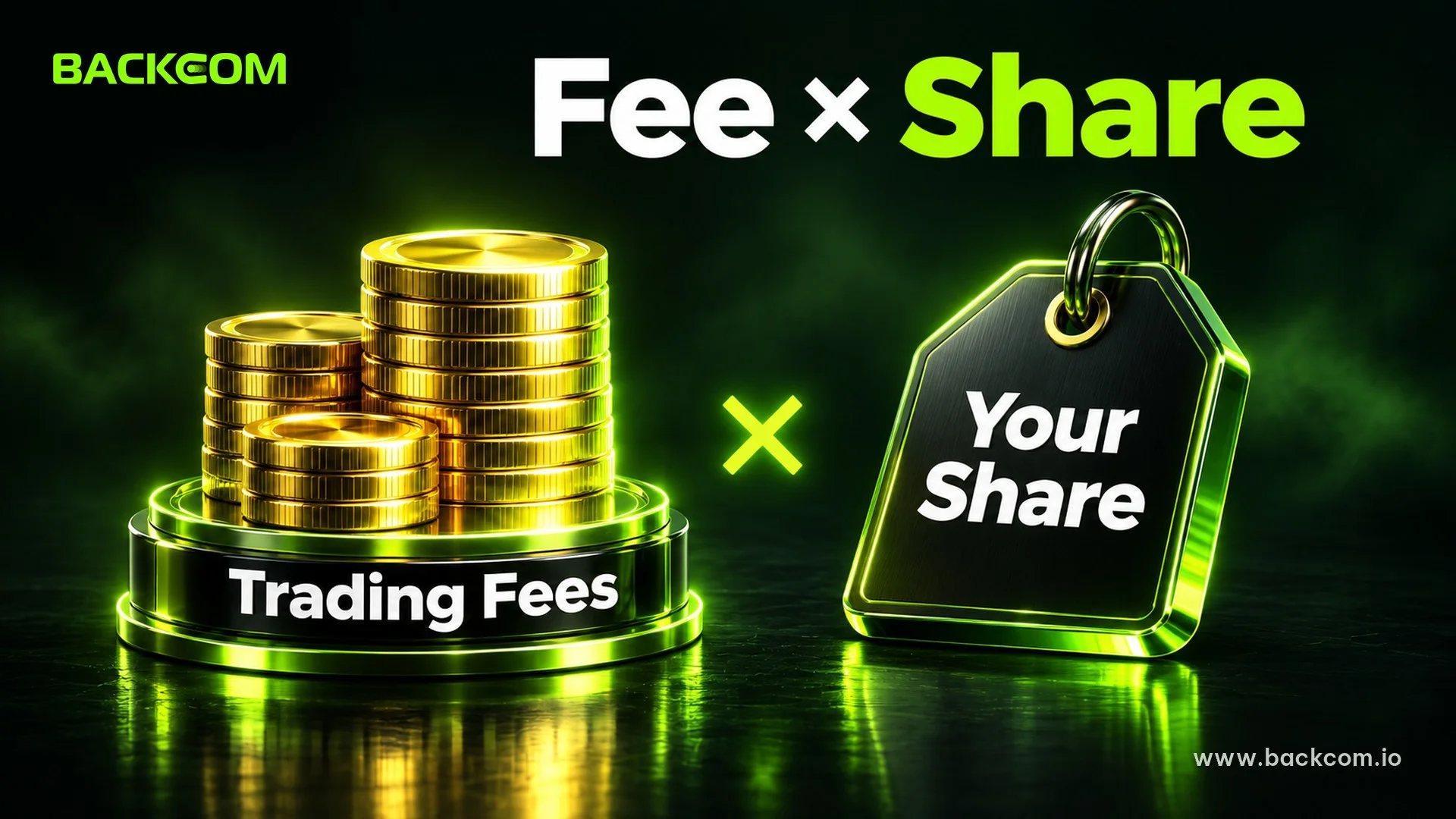
You can estimate a Binance fee rebate with one formula, using the fee you actually paid rather than a headline number.
Rebate = Trading fees paid × Rebate share
The fee comes from your own Binance fee records, because it depends on your product, order type, VIP level and whether you pay fees in BNB. For spot trading, the official Binance fee schedule showed 0.100% maker and 0.100% taker for a regular user at VIP 0 on 7 November 2026, and paying with BNB lowered that to 0.075%. Futures fees follow a separate schedule.
As an illustration only, assume a blended fee rate of 0.05% across your trades and a 30% share. This is not a Binance fee quote, so check your exact rate in your fee history.
| Monthly volume | Fees paid at an assumed 0.05% | Rebate at 30% | Net fees |
|---|---|---|---|
| $100,000 | $50 | $15 | $35 |
| $1,000,000 | $500 | $150 | $350 |
| $10,000,000 | $5,000 | $1,500 | $3,500 |
The table is a simple illustration, as at 7 November 2026, with assumed volumes, an assumed fee rate and the top published share. It is not a forecast, and your own tier and order types will change the result.
The $1,000,000 row matches the example on the program page: $500 of fees, a $150 rebate each month and up to $1,800 a year if the pattern held. On $100,000 of monthly volume the rebate is only $15, small next to the price move of a single leveraged position.
Binance Cashback Vs Binance Fee Discount: What Is The Difference?
A Binance cashback is money paid back to you after your fees are charged, while a Binance fee discount lowers the fee at the moment you trade. The difference changes how you check your numbers.
- A rebate or cashback appears as a separate payment. The fee on each trade is the normal fee, and a share returns later.
- A fee discount shows as a lower fee on the trade itself, so there is nothing to wait for. The BNB discount is the best-known example.
The program described here is the first kind: a weekly payment. In your Binance history, expect to see the full fee and look for the refund in the partner payout. The two can work together, because the rebate is calculated on the fee you actually paid, after any BNB discount. A lower base fee also lowers the rebate, so compare the net cost rather than adding the percentages.
For a wider look at how rebate programs differ between exchanges, read this crypto exchange rebate comparison.
Who Is Eligible For A Binance Rebate Referral?
Eligibility for a Binance rebate referral rests on three things: where you live, how your account was opened, and whether the account is linked before your first trade. Each one can stop a rebate on its own.
- Country: Binance offers different products in different places, and some countries are restricted. Check the accepted and restricted country lists for your KYC country before you register.
- Account origin: the account must be registered through the program link or code, or fall into one of the existing-account cases described below.
- Timing: the UID has to be linked before you trade. Trades made earlier normally cannot be rebated afterwards.
If you are unsure, ask support in writing and keep the answer.
How To Join The Binance Rebate Program With A New Account
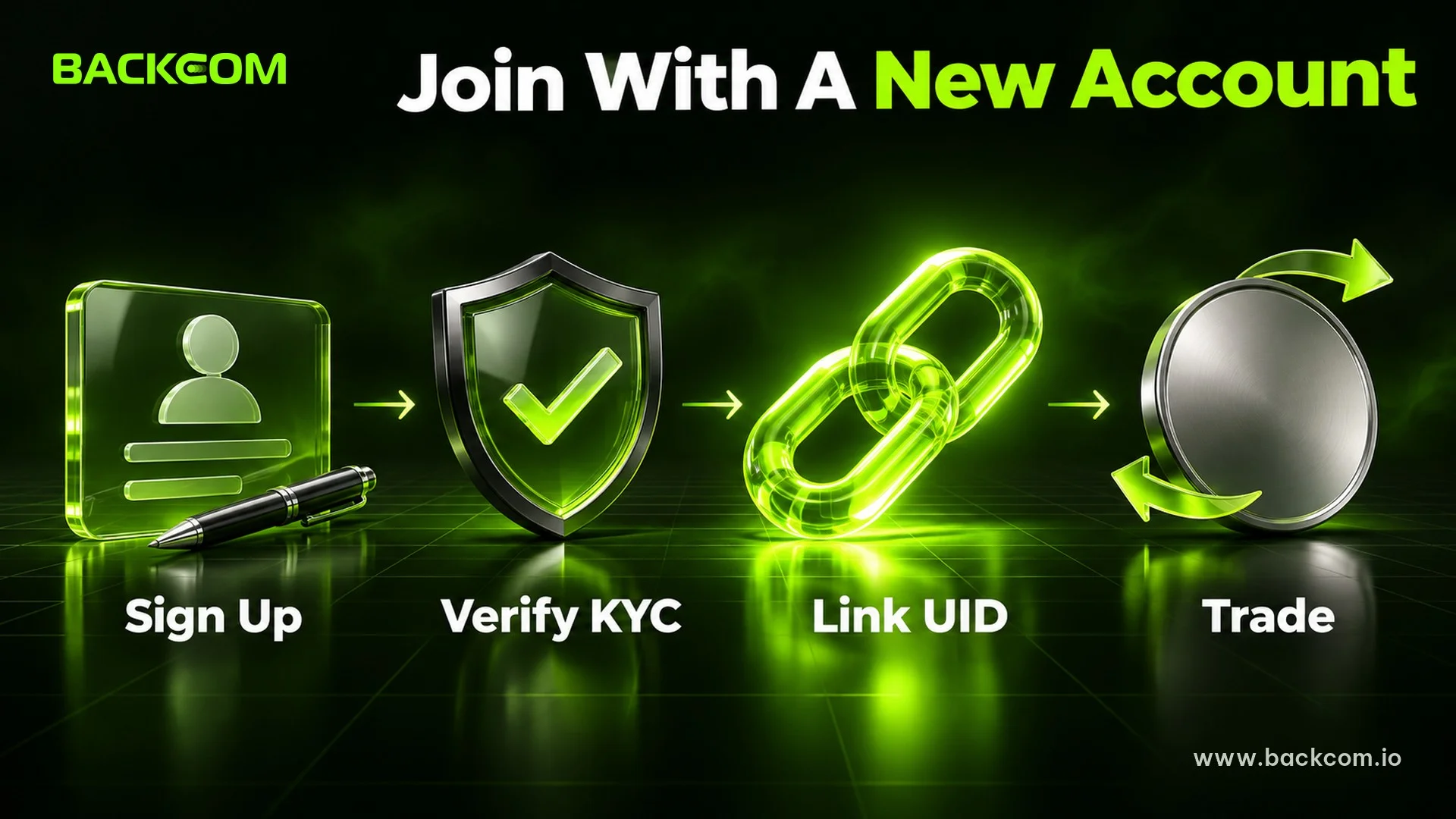
A new account joins the program in four steps, and the order matters because the link has to exist before your first trade. The steps below follow the published process.
- Register through the program link or enter the program code at signup. If you sign up in a browser, use a private or incognito tab so a saved referral link from another site is not applied instead.
- Complete KYC if Binance asks for it. Verification limits and requirements are set by Binance and depend on your country.
- Link your UID in the Backcom.io App. The UID is the numeric account ID shown in your Binance profile.
- Trade as you normally would. Rebates are credited as the weekly payout described above.
If you have not opened an account yet, the walkthrough on how to register on Binance and complete KYC covers registration and verification in order. Sub-accounts need their own link: a new sub-account does not inherit the rebate, so link each UID separately. Secure the account before you add funds, using the Binance account security checklist.
Can An Existing Binance Account Get Rebates?
Binance does not allow an existing referrer to be changed, so an existing account can join only in two narrow cases. The program page describes them by account age and activity.
| Your account | What the page says |
|---|---|
| Registered in the last 30 days, with no deposit, no trades and no referral code | Use Binance's referral binding page and enter the program code |
| Older than 90 days, never had a referrer and no trades in the past 90 days | Sign in through the program link and tap "Bind Now" |
| Anything else | Binance does not allow the referrer to be changed, so contact the partner before you do anything |
These conditions come from the program page as at 7 November 2026. Binance's own referral FAQ is stricter: it states that no corrective actions can be taken once the new user has registered. The pages conflict, so confirm the current rule with Binance before you rely on either.
The page also warns that opening a new account under the same identity may lead to the rebate being cancelled. Do not try to work around the rule with a second account.
How To Check Your Binance Rebate Payouts
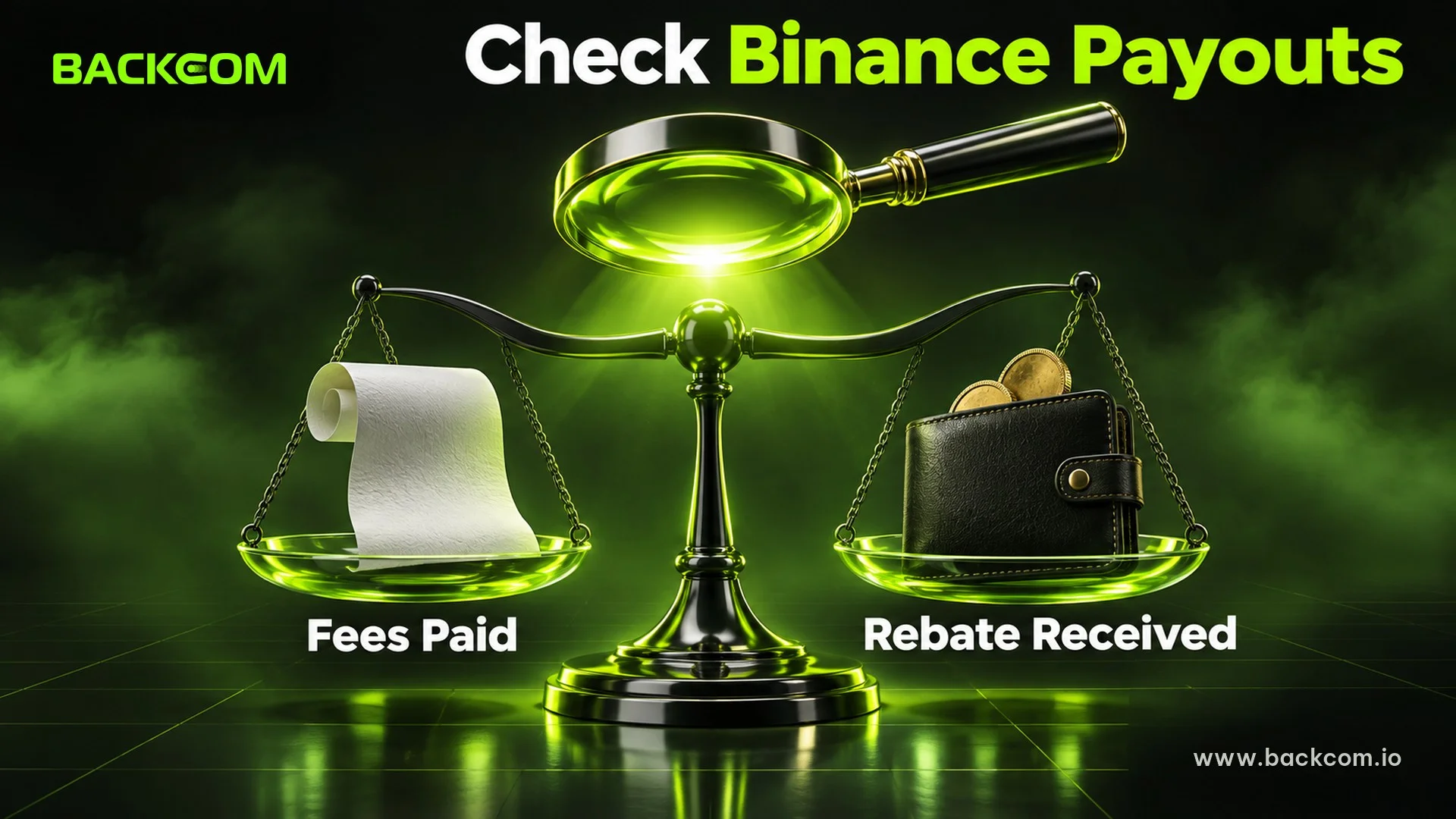
To check a Binance rebate payout, compare the fees on your own Binance records with the amount you received and the share the program promises. Do this for the first two or three payments, then every week or two.
- Export your fee history. Open your Binance trade or fee records for the period and total the fees for spot and futures. Use the fee actually charged, after any BNB discount you applied.
- Multiply by the rebate share. If your share is 30%, the expected payout is 30% of that total. If you are not sure of your share, ask support before you calculate.
- Compare with the payment received. Payouts are weekly and arrive after reconciliation with Binance affiliate data, so very recent trades may not be included yet. Ask which trading days each Monday payment covers, because the page does not state the cut-off.
- Investigate gaps early. A payout of zero or far below the estimate usually points to a link problem, not to a calculation error.
A short list of common causes when a payout looks too low:
- The UID was never linked, or a different UID was linked than the one you trade on.
- A sub-account was not linked separately.
- Trades were made before the account was linked, which normally cannot be corrected afterwards.
- A fee discount changed the base, so your own total is lower than the one you estimated.
- The account was registered outside the program, and it does not fall into either existing-account case.
If the numbers still do not match, send your fee export and a screenshot of the linked UID to support.
Mistakes That Stop A Binance Fee Rebate From Working
Most failed rebates come from a handful of avoidable mistakes made in the first ten minutes. Check yourself against this list.
- Registering first and linking later. The program page says a rebate cannot be attached retroactively, so the sequence is: register through the link, link the UID, then trade.
- Forgetting the sub-accounts. Each one is its own UID.
- Assuming the percentage is the whole story. A share of a fee is still only a share of a fee. Spread, slippage and funding sit outside it. Our guide to maker and taker fees shows how to lower the base fee, and the explainer on funding rates covers a cost that rebates normally do not touch.
- Never checking. A broken link can run for months unnoticed.
Risks And Limits Of The Binance Rebate Program
A rebate is a small discount, and it comes with limits that are easy to overlook.
- It can encourage overtrading. The program pays only when you trade, so it can push you to trade more than your plan says. Never raise your volume to earn more rebate.
- It does not reduce market risk. Leveraged positions can lose far more than a month of refunds. Our guide to how to calculate liquidation price shows how quickly a position can be closed.
- Terms can change. Binance and the partner can both change fees, rebate shares and conditions, and taxes on rebates differ by country of residence.
- Counterparty risk remains. A rebate does not make an exchange safer. Read our review of whether Binance is legit for regulation, security and history, and see the Binance and Bybit comparison if you are choosing between platforms.
How To Check Whether You Are Eligible
If you want to see whether the program fits how you trade, start with the current published terms and the four payout checks above. The Binance Rebates page lists the rate, payout day and linking steps in one place.
Backcom.io is an independent introducing broker (IB/affiliate) of the exchanges it lists, including Binance; rebates are paid from the commission the exchange pays Backcom.io. See the risk disclaimer for details. A rebate is not a reason to open an account or to trade more than you planned.
Frequently Asked Questions (FAQ) About The Binance Rebate Program
How Much Is The Binance Rebate?
The published rebate is up to 30% of the trading fees you pay, covering spot and futures, as at 7 November 2026. It is a share of fees, so the amount in dollars depends on your volume, product and fee tier. For example, $500 of monthly fees would return up to $150.
When Are Binance Rebates Paid?
The program page states that rebates are paid every Monday, once your trades have been reconciled against Binance affiliate data. There is no minimum payout and no time limit. Because the page does not state exactly which days each payment covers, ask support if you need to match a payment to a specific week.
Can I Get Rebates On An Existing Binance Account?
Only in two cases. An account registered in the last 30 days with no deposit, no trades and no referral code can use Binance's binding page. An account older than 90 days that never had a referrer and has not traded for 90 days can bind through the program link. Otherwise Binance does not allow the referrer to change, so ask before you act.
Why Is My Binance Rebate Lower Than Expected?
The most common reasons are an unlinked or wrong UID, an unlinked sub-account, trades made before linking, or a fee discount that lowers the base. Export your fee history, multiply by the rebate share and compare. If the gap remains, send your fee export and the linked UID to support.
Does A Rebate Make Binance Cheaper Than Other Exchanges?
Not automatically. The rebate applies to a fee, and fees differ by exchange, product and tier. Compare the net fee after the rebate, then add spread, slippage, funding and withdrawal costs.
Conclusion: Verify The Link, Then Verify The Payouts
The Binance rebate program is simple in design: up to 30% of your fees, paid weekly, if your account is linked before you trade. The risk is not in the percentage but in a broken link or an ineligible existing account that nobody notices. Register in the right order, link every UID, compare the first payouts with your fee history, and treat the rebate as a small cost reduction rather than a source of profit.
Disclaimer: This content is for information only and is not investment advice. Crypto assets are volatile and you can lose your capital. Rebate terms and exchange fees can change, and rules differ by country of residence. Check the current terms and your local regulations before you register or trade.
Was this article helpful?
Join The Backcom.io Community
Get the latest on trading rebates, trading tips, and broker deals — and connect with thousands of traders worldwide.

Backcom App
Track Your Rebates Every Day
Every rebate is visible by broker and by day. Manage your wallet and withdrawals in one place.
Open Backcom App