Safe Haven Currencies Forex: How USD, JPY And CHF React When Markets Panic


When stock markets slide, traders often see the same picture: equities in red, while the Japanese yen and the Swiss franc move higher. Money is leaving risky assets and looking for a quieter place to wait. That is the basic idea behind safe haven currencies forex traders watch.
The catch is that the list is not fixed. A safe haven currency can be the US dollar in one crisis, the yen or the franc in another, and in some weeks all three move in different directions. Traders who treat "fear means buy the yen" as a rule soon meet a session that breaks it.
In this article, Backcom.io explains what safe haven currencies are, why the yen safe haven role and the Swiss franc safe haven role work through two different mechanisms, how the US dollar behaved in two dated events, and how traders can use this without guessing.
Safe haven currencies are currencies that investors tend to buy or hold when markets fear risk, so their value holds or rises while assets such as stocks, commodities and high-yield currencies are being sold. Traders call this state risk-off, the opposite of risk-on, when appetite for risk returns.
The key point is that "safe haven" describes where money flows, not a promise about price. A currency earns the label only when many large investors choose it at the same time during a panic, which is why the list changes over time.
Currencies seen as havens usually share three traits:
- Deep liquidity: large orders fill with little slippage, which matters when big funds need to change positions quickly.
- A stable economy and institutions: holders believe the currency will not lose value suddenly because of a political or debt crisis.
- A role in global funding flows: the currency is often what investors borrow or receive when leveraged positions are closed.
These traits do not guarantee direction, because a shock from financial markets and a shock from the issuing country itself can produce very different results.
Safe Haven Currencies Forex: Why USD, JPY And CHF Are Chosen
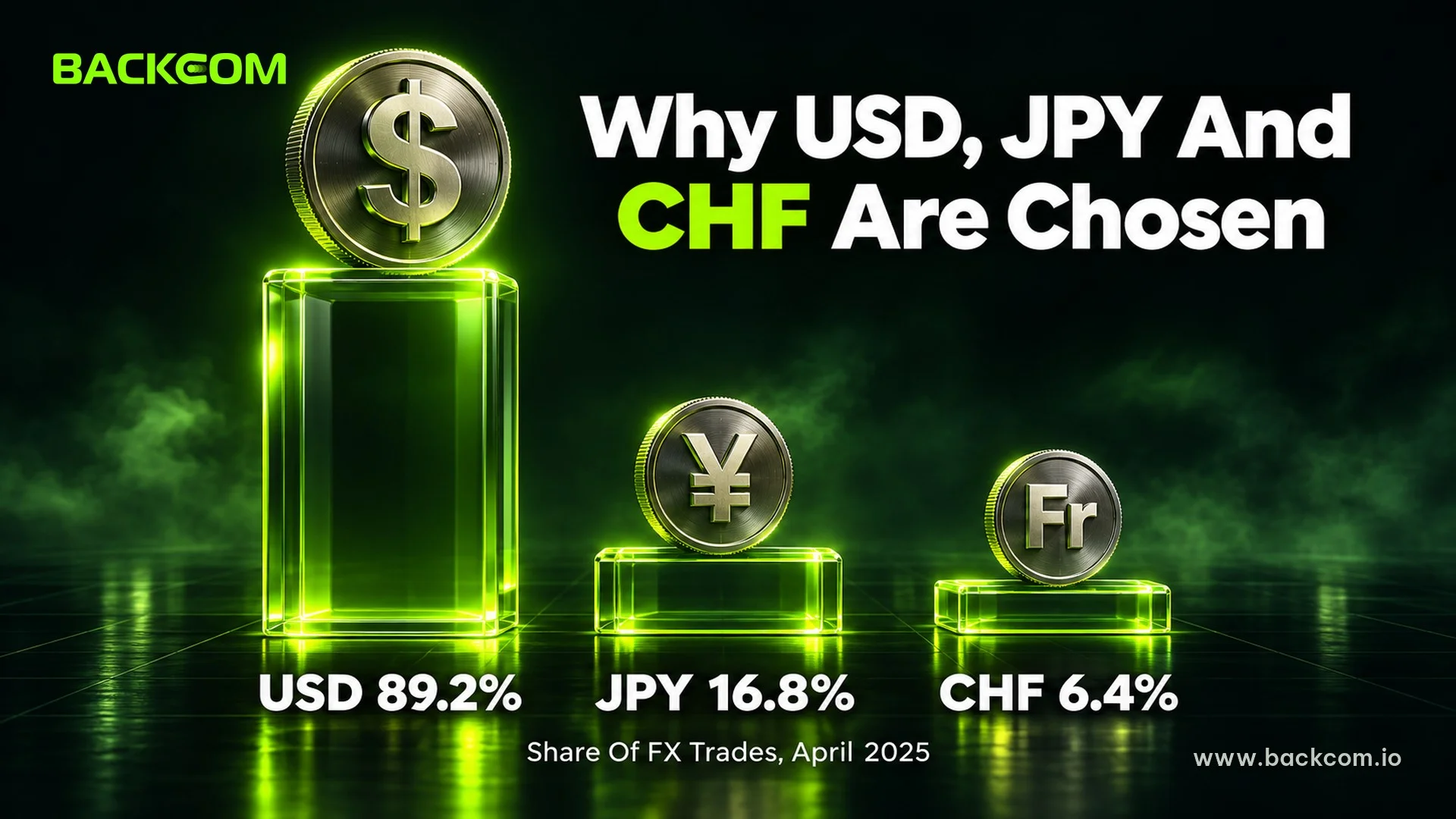
These three currencies are the ones named most often, and each has its own reason. The table below summarizes the reason and the weak point of each.
| Currency | Why it is seen as a haven | Weak point to remember |
|---|---|---|
| USD | The deepest liquidity in the world, tied to the US bond market | Can fall when the shock comes from the United States itself |
| JPY | Low interest rates make it a funding currency, so closing positions means buying yen back | Changes in Bank of Japan policy can shift flows |
| CHF | Low inflation, political and economic stability, a long reputation as a haven | The Swiss central bank may act when the franc becomes too strong |
Mechanisms referenced as at 22 November 2026. Each currency behaves differently from one period to the next, so check the context before trading.
On scale, the Bank for International Settlements (BIS) triennial survey shows that OTC foreign exchange trading reached USD 9.6 trillion per day in April 2025. The US dollar was on one side of 89.2% of trades, the yen 16.8% and the Swiss franc 6.4%, according to figures the BIS published at the end of September 2025. For the primary source, see the BIS survey of FX turnover in April 2025.
In the same survey, the USD/CHF pair alone accounted for 4.9% of global turnover, up from 3.9% in 2022. The franc is clearly not a minor currency, and trading in it is growing.
Traders should read these numbers as evidence of liquidity, not of price direction.
Yen Safe Haven: The Carry Trade And The August 2024 Unwind
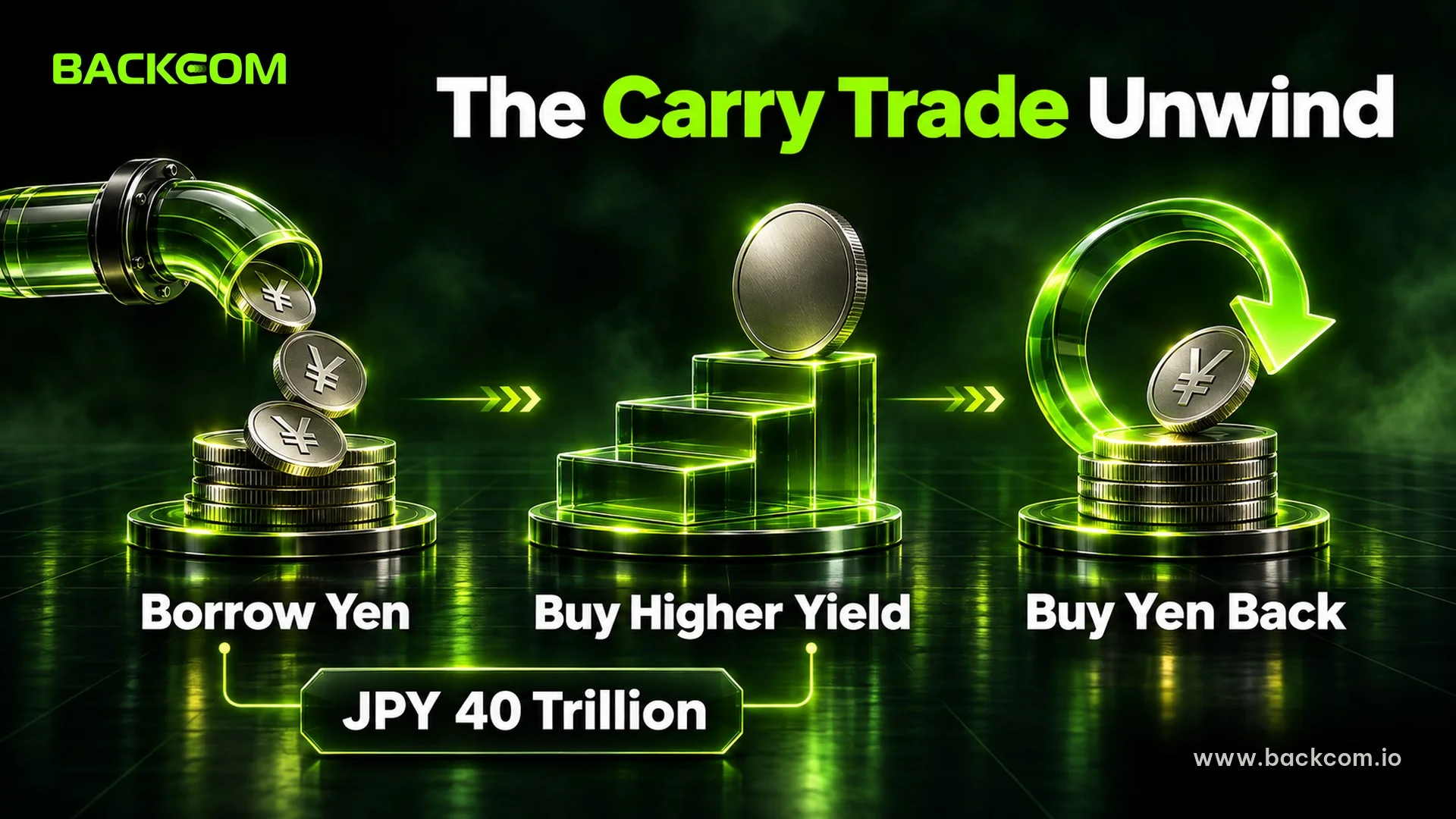
The yen safe haven role comes from the carry trade: investors borrow yen at low interest rates, convert it into a higher-yielding currency and earn the difference. When markets turn fearful they close those positions and must buy yen back to repay the loans, so the yen rises even without good news from Japan.
The clearest example is early August 2024. According to Fortune on 6 August 2024, the Bank of Japan had just raised its rate to 0.25%, the Nikkei posted its worst daily loss since 1987 on Monday 5 August 2024, and the S&P 500 fell 3% the same session. Read more in Fortune's explainer on the carry trade and the yen.
On the size of the positions, BIS Bulletin No. 90, published on 27 August 2024, estimated roughly JPY 40 trillion (about USD 250 billion) in carry trades going into the event, and the authors said the figure is probably biased down because of data gaps. The bulletin concluded that deleveraging and higher margin requirements amplified the initial move. Source: BIS Bulletin No. 90.
Traders can take three points from this example:
- The yen rose because positions were closed, not because Japan suddenly became richer: the mechanism is buying yen back to repay debt, so the move can be fast and short.
- Bank of Japan policy is the central variable: when the BOJ raises rates, the interest rate gap narrows and carry trades become less attractive.
- Yen pairs can swing hard within hours: pairs such as USD/JPY can travel a long way before a trader has time to adjust a stop loss.
For that reason, traders who trade yen pairs should reduce size around Bank of Japan meetings and on days when US data could reverse rate expectations.
Swiss Franc Safe Haven: Why CHF Gains When Markets Fear Risk
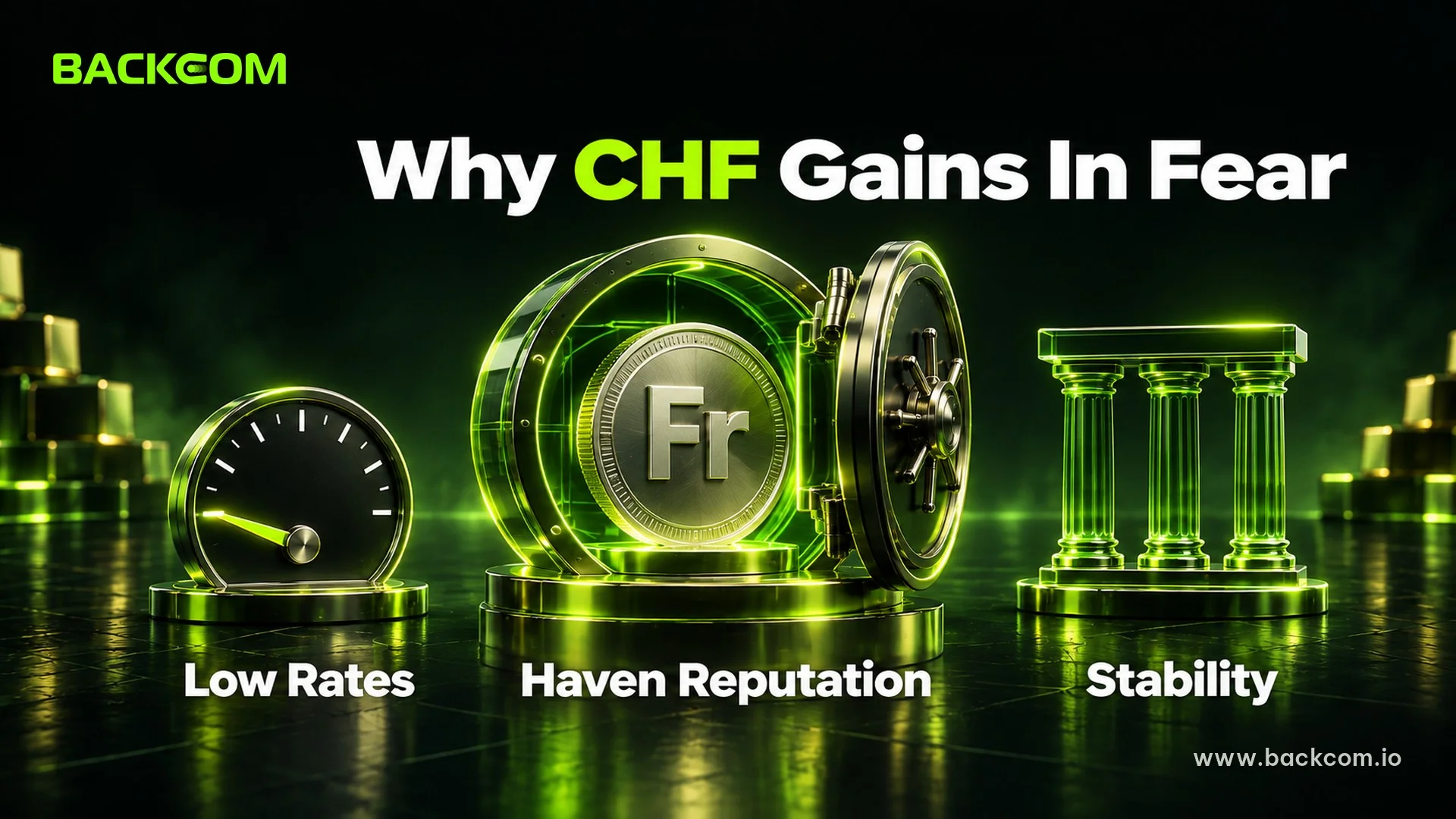
The Swiss franc safe haven role follows a different logic from the yen. It does not depend on the carry trade but on long-term trust. The Swiss National Bank (SNB) explains on its education page that the franc has strengthened for two reasons. The first is that interest rates in Switzerland tend to be lower than elsewhere. The second is the franc's reputation as a safe haven, particularly in times of high uncertainty worldwide.
The SNB also notes that Swiss inflation has traditionally been low, alongside political and economic stability, and that no other country has kept average inflation lower. Some investors are prepared to hold francs even though returns are lower than on other currencies. Source: the SNB page "What determines the Swiss franc exchange rate?".
Traders should keep two points in mind when watching USD/CHF:
- Moves can run in long steps: the franc often rises over many sessions in a row when sentiment stays weak.
- Intervention risk is always present: news from the SNB about limiting franc strength can reverse price within a session.
That is why a short USD/CHF position built on the "haven" idea needs a clear stop loss, instead of being held indefinitely in the belief that the franc will always be strong.
Is The US Dollar Still A Safe Haven? Lessons From The April 2025 Tariff Shock
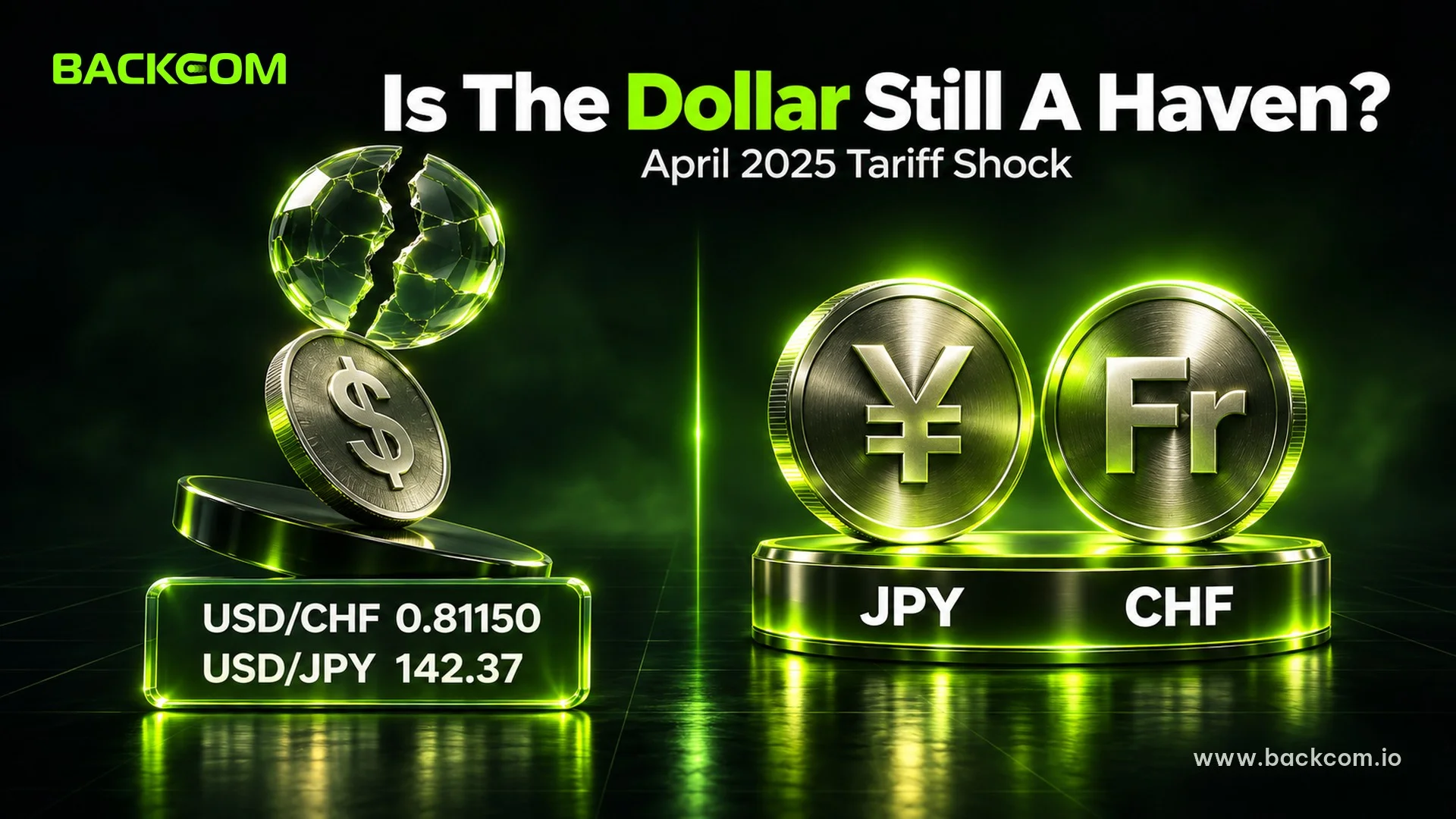
The US dollar is the clearest case showing that the haven list is not fixed. In many financial crises, investors rushed into the dollar and US Treasuries. When the shock comes from US policy itself, the result can be the opposite.
Take the first full week of April 2025, when the United States announced a wave of new tariffs. According to Reuters, republished by the New Straits Times on 11 April 2025, USD/CHF fell to 0.81150 at one point, its lowest since January 2015, after dropping nearly 4% the day before. In the same report the dollar fell 1.4% against the yen to 142.37. Read the original at the New Straits Times report.
Fortune's headline the same day, 11 April 2025, said the dollar was losing its safe haven status because of tariffs. Deutsche Bank strategist George Saravelos described a simultaneous fall in US equities, the dollar and the bond market. Source: Fortune's article.
Put side by side, the two events show the difference:
| Event | Source of the shock | Japanese yen | Swiss franc | US dollar |
|---|---|---|---|---|
| Early August 2024 | Weak US data and the carry trade unwind | Rose as positions closed | — | Fell against the yen |
| Early April 2025 | US tariffs | Rose against the dollar | USD/CHF at 0.81150, lowest since January 2015 | Fell broadly |
Figures referenced as at 22 November 2026, according to the sources cited. The size and direction of each episode can differ when a new event occurs.
The practical lesson: before assuming "fear means buy the dollar", traders should ask where the shock started. A shock from global financial markets often pushes money into the dollar, while a shock from US policy can weaken it.
Gold And Safe Haven Currencies: Do They Move Together?
Gold and safe haven currencies are often mentioned together, but they are not one group. Gold is a metal that belongs to no country, while the yen, franc and dollar are fiat currencies tied to central bank policy.
The most useful link is between gold and the dollar. Because gold is priced in dollars, a weaker dollar tends to support gold and a stronger dollar tends to weigh on it. The US Dollar Index helps measure this, and you can read how it works in what the DXY is and how it affects gold.
Gold and haven currencies can move in the same direction in one event and in opposite directions in another, so treat them as different haven options, not a single signal. During a risk-off episode, watch the Dollar Index, gold and the pair you trade at the same time. When all three tell the same story, the signal is much stronger than when only one of them moves.
How Traders Use Safe Haven Information Without Guessing
Knowing which currencies are havens only helps when it becomes a process. Here is a short routine to apply before and during volatile markets.
A pre-trade checklist:
- Identify where the shock comes from: economic data, central bank policy, geopolitics, or the country that issues the currency.
- Check the day's event calendar: rate meetings and major data releases are common trigger points for risk-off moves. The economic calendar helps you filter them quickly.
- Read the interest rate context: understanding the Fed interest rate and how it affects gold and the dollar shows which expectations the dollar is pricing.
- Choose a pair that matches the story: if the cause is a carry trade unwind, yen pairs react more than franc pairs.
- Set the stop loss before entering: haven moves are often fast and can reverse when new headlines arrive.
On risk management, traders should reduce position size compared with a normal day when trading around major events. The per-trade risk rule is covered in forex money management and lot size.
Traders should also avoid three common mistakes:
- Buying the yen by reflex: if the BOJ has just raised rates or the yen has already risen for days, the opportunity may have passed.
- Treating the dollar as always a haven: the April 2025 episode is evidence to the contrary.
- Holding through major news with no plan: an opening gap can fill an order far from the stop. See what a price gap is and how to handle it.
For news-driven traders, the news trading process before, during and after the release adds practice for the steps above.
Frequently Asked Questions (FAQ) About Safe Haven Currencies
Which Safe Haven Currency Is Strongest Among Risk Off Currencies?
No currency is strongest in every situation. The yen often rises when carry trades unwind, the franc rises when uncertainty lasts, and the dollar tends to gain when the shock comes from outside the United States. Choose according to the kind of shock under way, and always use a stop loss.
Why Does The Japanese Yen Rise When Stocks Fall?
The yen rises because investors close positions funded in yen and must buy yen back. The BIS estimated about JPY 40 trillion in carry trades before the August 2024 event. The mechanism is strong but can be brief, so traders should not treat it as a law.
Is The US Dollar Always A Safe Haven?
No. The dollar is often sought when a shock starts outside the United States, but in the April 2025 tariff episode it weakened while the yen and the franc were favoured. Check where the shock comes from before deciding.
Conclusion: Treat Safe Haven Currencies As Context, Not As A Signal
Safe haven currencies describe how money behaves when markets fear risk, not a fixed rule. The yen is tied to the carry trade, the franc to long-term trust and low inflation, and the dollar is both the most liquid currency and one that can weaken when the shock comes from the United States itself. Traders need to weigh three things together: where the shock comes from, the interest rate backdrop and the risk of their own position.
If you are new to macro data, a good place to start is what the FOMC is and the 2026 meeting schedule, which explains the rhythm of Fed rate announcements.
Disclaimer: This content is compiled by Backcom.io for information only and is not investment advice or a trading recommendation. Trading forex and CFDs carries a high level of risk and you may lose all of your capital; past behaviour of currencies does not guarantee future results.
Was this article helpful?
Join The Backcom.io Community
Get the latest on trading rebates, trading tips, and broker deals — and connect with thousands of traders worldwide.

Backcom App
Track Your Rebates Every Day
Every rebate is visible by broker and by day. Manage your wallet and withdrawals in one place.
Open Backcom App